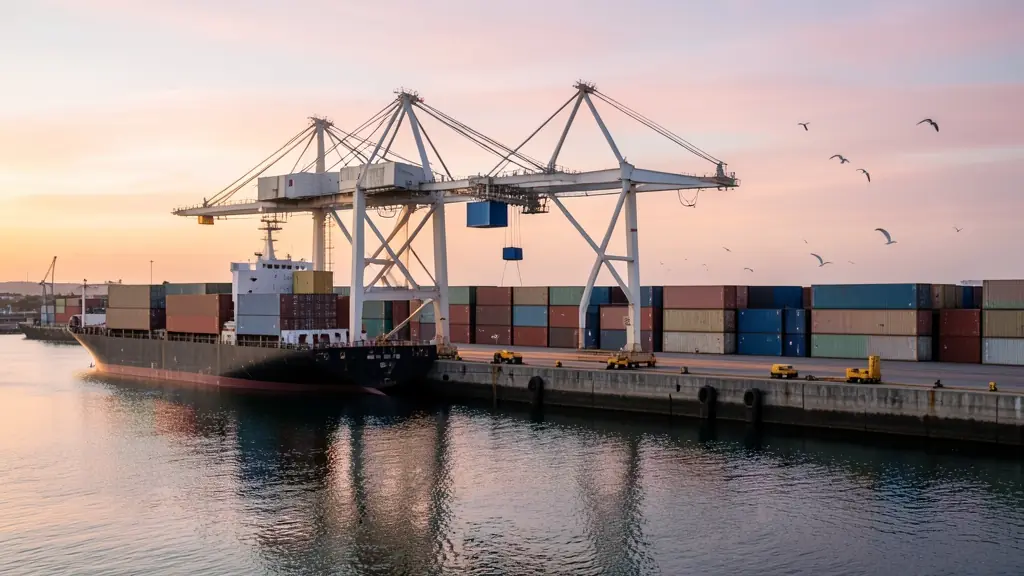
Sea freight carries most of what South Africa imports and exports, from a single pallet sharing a box to a string of 40 foot containers of tiles. It is the cheapest way to move heavy or bulky cargo over long distances, and the slowest. Send the cargo, the ports or towns and your dates, and independent forwarders and sea freight companies that ship that route quote you directly.
Price guideQuoted per loadRoute, mass, size, dates and handling change the price too much for a fair published range. Ask two or three businesses to quote the same load.
FCL or LCL: a whole box or a share of one
With FCL (full container load) you rent the whole container, it is sealed at origin and opened only at your door or depot. With LCL you pay for the cubic metres you use in a box shared with other shippers. LCL suits small volumes but adds depot handling, extra days and more chances of damage, so pack it for the trip. As a rough guide, once you pass about 12 to 15 CBM, price a 20 foot as well. Our CBM and container calculator shows how full each size would be.
Container sizes and what really fits
| Container | Inside volume, about | Usual use |
|---|---|---|
| 20 foot | 33 CBM | Heavy goods: tiles, steel, paper |
| 40 foot | 67 CBM | Furniture, mixed general cargo |
| 40 foot high cube | 76 CBM | Light, bulky stock |
Heavy cargo fills the mass limit before the space, which is why a Cape Town importer of porcelain tiles often ships 20 foot boxes half empty by volume. Road limits also apply after landing, so ask how the box will be moved by container transport from the port.
Ports, transit and delays
Durban handles the largest share of containers, followed by Cape Town, Ngqura and Port Elizabeth on the Eastern Cape coast, with Richards Bay mainly for bulk. Europe and Asia sailings usually take several weeks port to port, before clearing and delivery. Plan for weather at the Cape, berthing queues and equipment breakdowns: a ship that waits at anchorage for days pushes back every date after it. Ask the forwarder to track the vessel and tell you when it berths, not only when it sails.
The cost lines on a sea freight quote
The shipping line's ocean rate is only one line. Expect fuel and currency surcharges, origin and destination terminal handling, documentation and the bill of lading, port charges, cargo dues, clearing, duty and VAT, and road haulage to your door. Rates move with the exchange rate and the line's own tariffs, so quotes carry short validity dates. Free days at the port are limited: after them, storage and container detention start counting, which is why paperwork done before arrival matters. See customs clearing for that side.
Who asks for this
- Private people
- Bringing a household's belongings or a car home by sea after years working overseas.
- Shops and online sellers
- Importing a season's furniture, homeware or clothing stock in one container instead of many cartons.
- Factories and plants
- Bringing in raw material and exporting finished goods on regular weekly sailings.
- Farms and packhouses
- Exporting citrus, grapes or avocados in reefer containers through Durban or Cape Town.
- Mines and quarries
- Importing heavy machinery and spares in containers or as breakbulk on open frames.
- Builders and contractors
- Importing tiles, sanitaryware or steel for large projects, with lead times built in.
- Importers and exporters
- Running FCL and LCL shipments and watching port free days, storage and detention.
- Hauliers and owner drivers
- Collecting landed containers at the terminal once they are cleared and released.
Frequently asked questions
What is the bill of lading and why does it matter?
It is the shipping line's receipt for the cargo and the contract of carriage. An original or released bill is usually needed before the line hands over your container, so a late bill means a box waiting at the port.
Can I export fruit or meat by sea freight shipping?
Yes, in reefer containers that hold the set temperature for the whole voyage. Packhouses book plugs and stack dates well ahead in the citrus season, and the box must be pre cooled before loading.
How are sea freight prices worked out?
FCL is usually priced per container, LCL per CBM or per ton, whichever is greater, with a minimum charge. Local charges at both ports and inland haulage come on top of the ocean freight.
Who quotes me, and do you own the ships?
No. Independent forwarders and sea freight companies reply to your request with their own quotes. We do not ship, clear or hold cargo, and we take nothing from the freight.