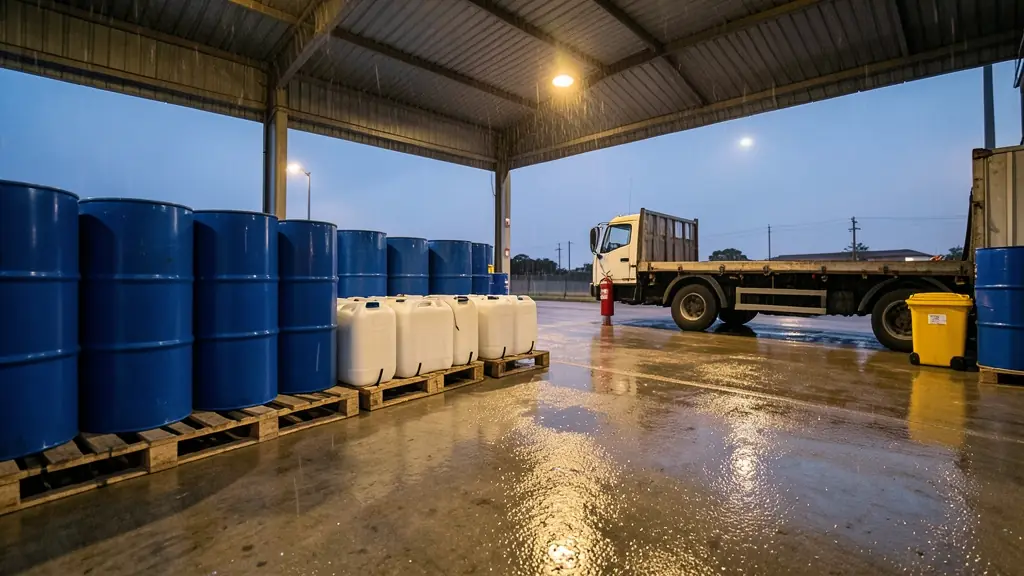
Dangerous goods transport covers anything that can burn, explode, poison, corrode or leak on the road: fuel in drums, LP gas cylinders, paint and thinners, acids, pool chlorine, aerosols and lithium batteries. A Sasolburg blender with forty drums of class 3 solvent and a solar installer with a pallet of batteries face the same question: who may legally carry it? Send one request and independent hazchem carriers on your route quote you directly.
Price guideQuoted per loadRoute, mass, size, dates and handling change the price too much for a fair published range. Ask two or three businesses to quote the same load.
The nine classes, with things you might actually ship
| Class | What it is | Everyday examples |
|---|---|---|
| 1 | Explosives | Blasting supplies, fireworks |
| 2 | Gases | LP gas, oxygen, aerosols |
| 3 | Flammable liquids | Diesel, paint, thinners, ethanol |
| 4 | Flammable solids | Matches, some metal powders |
| 5 | Oxidisers, peroxides | Pool chlorine, some fertilisers |
| 6 | Toxic, infectious | Pesticides, lab samples |
| 7 | Radioactive | Gauges, medical sources |
| 8 | Corrosives | Battery acid, caustic soda |
| 9 | Miscellaneous | Lithium batteries, dry ice |
The product's UN number and class are on its safety data sheet, section 14. Give them in your request.
Your part and the carrier's part
As the consignor you classify the product, pack it in approved packaging, mark and label it, and hand over the safety data sheet and a dangerous goods declaration. The carrier supplies a driver trained for hazchem with the right PrDP, placards on the vehicle, the tremcard for each product, fire extinguishers and spill gear, and loads only products that may travel together. Oxidisers next to fuel, or acids beside cyanide salts, is the kind of mixed load a trained loader refuses. The SANS dangerous goods standards set the detail; ask the carrier or a safety adviser rather than guessing.
Small quantities, couriers and flying it
Small inner packs below set limits can sometimes move as limited quantities with lighter rules, but that depends on the product and the pack size, so ask. Many couriers refuse dangerous goods outright, or take only a short list on road services, which is why a single box of thinners can be hard to send by courier. Rules for air freight are stricter again: some items fly only on cargo aircraft and others not at all.
Why the cheapest truck may be the wrong one
A general freight truck with a low rate may simply not be allowed to carry your class, and an untrained load is a fine and a voided claim waiting to happen. Expect a higher rate per load for hazchem, and fewer trucks available on short notice. Ask what goods in transit cover applies to dangerous goods, since many policies treat them separately. For liquids in bulk, see bulk and tanker transport; for sizing a palletised load, the truck size calculator helps.
Who asks for this
- Private people
- A few gas cylinders or paint tins that a normal courier will not accept.
- Shops and online sellers
- Hardware and pool shop stock of chlorine, thinners and aerosols to branches.
- Factories and plants
- Drums and IBCs of solvent, resin or acid between plants and customers.
- Farms and packhouses
- Pesticides, fuel and fertiliser that need the right truck to reach the farm.
- Mines and quarries
- Explosives, reagents and acids moved by approved carriers under strict escort rules.
- Builders and contractors
- Paint, sealants, gas and fuel for a site, packed and declared properly.
- Importers and exporters
- Classed imports from the port with the declaration matching the shipping papers.
- Hauliers and owner drivers
- Hazchem work needing trained drivers, placards, tremcards and the right cover.
Frequently asked questions
Who will quote me for dangerous goods transport?
Independent transporters and owner drivers that carry hazchem on your route. We pass your request on; every quote comes straight from the carrier. Hazchem work is theirs alone: we carry nothing.
What is a tremcard?
A transport emergency card for each product on the truck, telling the driver and emergency services what to do in a spill, fire or accident. The carrier keeps it in the cab.
Can class 3 and class 9 goods share one truck?
Often yes, but it depends on the exact products and the rules for mixed loading. Give each UN number and the carrier will check what can travel together.
Can I take a few gas cylinders in my own bakkie?
Small amounts for your own use are treated differently from a commercial load. For anything you sell or deliver, ask a trained carrier or a dangerous goods adviser first.
Related topics
Work it out first
- Volumetric weight calculatorBox sizes, mass, quantity and how it travels in: the volumetric weight and the chargeable weight you pay for out
- CBM and container calculatorCartons or pallets with sizes, mass and count in: the total CBM, the mass and how full a 20 foot, 40 foot or high cube is out
- Truck size and pallet calculatorPallets, mass each, pallet size and loose freight in: the smallest truck that takes it, by floor and by payload, out