
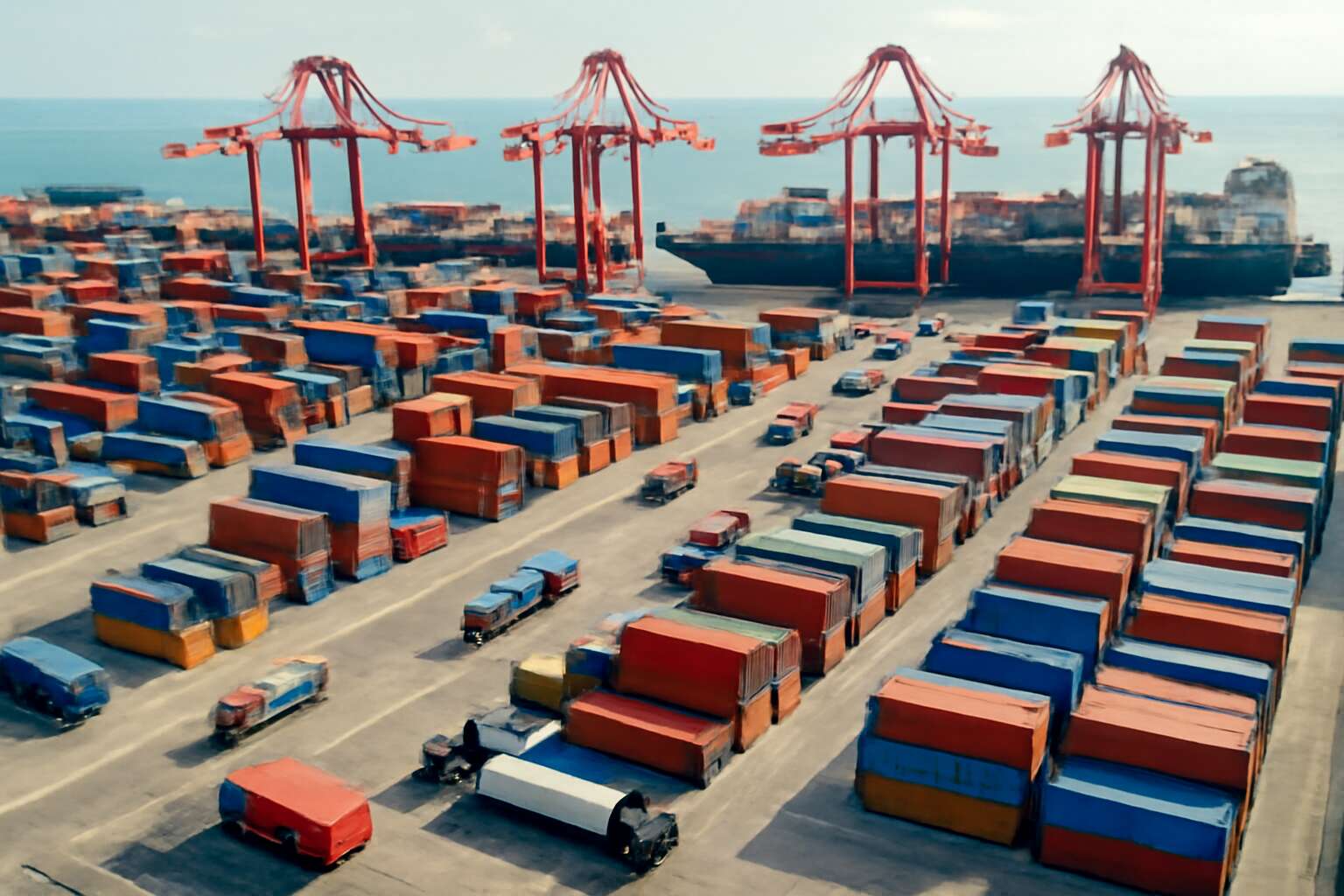
Understanding Freight Transport Operations
Definition and scope of freight transport operations
Across South Africa’s vast corridors, freight flows under the quiet watch of night shifts and blinking terminal lights. A single schedule twist can tilt an entire week’s balance—freight transport operations being a living organism. I have walked dim depots and watched the data lights pulse; the cargo’s fate feels whispered in those moments.
Freight transport operations orchestrate moving goods from origin to destination, spanning road, rail, sea, and air, with fleets, warehouses, and the data that binds them. It is planning, execution, and governance, where every mile is tracked and every handover matters. For deeper exploration, the freight transport operations pdf offers a structured overview.
Scope includes:
- Modal mix and network design
- Fleet management, scheduling, and visibility
- Warehousing, packaging, and handling at transfer points
- Compliance, safety, and risk management
Key stakeholders in freight operations
Across South Africa, logistics costs hover around 11% of GDP, a reminder that each night shift, loading dock, and blinking terminal light keeps the economy steady. The freight transport operations pdf frames this choreography in concise terms, inviting readers to see the movement behind schedules and cargo handed from one hand to another.
Understanding who matters helps translate data into action. The key stakeholders in freight operations include:
- Shippers and consignees who define demand and acceptance windows
- Carriers, drivers, and fleet managers who turn plans into miles
- Freight forwarders and logistics operators who stitch transfers and paperwork
- Regulators, safety bodies, and customs authorities who temper risk
- Terminals, warehouses, and IT systems providers who host the handovers
Together they turn data into reliable flows, shaping governance, safety, and service levels that South African supply chains rely on.
Typical workflows from pickup to delivery
Across South Africa, every late-night dock and blinking terminal light keeps the economy steady. Freight moves through a choreography of people and machines, turning schedules into real-world movement!
The freight transport operations pdf frames this choreography in concise terms, inviting readers to see behind cargo handoffs and the quiet moments when plans become miles traveled.
- Pickup and intake, where orders meet assets
- Loading, securing, and stowage at the dock
- Transit monitoring and handovers, keeping visibility
- Delivery, proof of receipt, and post-checks
In this country, the human thread—drivers, logisticians, and controllers—keeps moving, even when the night is long. The resilience of rural and urban routes becomes poetry in motion.
Common challenges in freight operations
South Africa’s freight networks move through a maze of rules, road conditions, and tight schedules. A single disruption can cascade across cities, warehouses, and ports. The freight transport operations pdf frames these friction points in plain terms, offering clarity without overcomplication. “Time is money on the road,” a veteran dispatcher reminds us, and that rings true as late arrivals ripple into higher costs and unhappy customers.
Common challenges include balancing capacity with demand, navigating last-mile volatility, and maintaining visibility across multi-modal legs. Crucially, data quality and real-time alerting are the difference between plan and catastrophe.
- Regulatory compliance across provinces
- Driver shortages and labour turnover
- Port congestion and dock delays
- Maintenance and asset utilization
In this environment, resilience matters; robust data capture and clear handovers keep goods moving through urban corridors and rural byways alike.
How digital documents support operations
From Cape Town’s ring roads to Gauteng’s freight arteries, time is money on the road, and the margin for delay is razor-thin. The freight transport operations pdf reveals how digital documents bind carriers, shippers, and customers into a single, predictable flow.
- Electronic Bills of Lading (eBOL)
- Cargo manifests
- Proof of delivery and invoicing records
With real-time status, data validation, and automatic handovers, digital documents cut friction across multi-modal legs and tighten accountability in South Africa’s diverse routes. Clean records help drivers, schedulers, and customers stay aligned, even when weather or road conditions shift the timeline.
PDF Resources for Freight Operations
Using PDF formats for load plans and route sheets
Across South Africa’s logistics lanes, the real bottleneck isn’t the road—it’s the paperwork that travels with it. A recent industry note suggests up to 60% of dock delays stem from misfiled PDFs. A freight transport operations pdf can act like an air-traffic controller, aligning load plans with route sheets and keeping drivers oriented when detours arise. It’s not glamorous, but it saves time and sanity—the following points illustrate how.
- Single source of truth across depots and fleets
- Print-ready and mobile-friendly formats for on-road crews
- Metadata and searchable fields for quick auditing
From Cape Town to Polokwane, the beauty of PDFs is stability and legibility. The discipline of one versioned bundle—load plans and route sheets in PDF format—keeps drivers and dispatchers aligned even when the road throws a curveball. No more frantic chasing of the latest revision; one file, many eyes, fewer headaches.
Creating compliant shipment documents in PDF
Across South Africa’s logistics lanes, a single PDF can become the unsung traffic controller. Industry chatter pegs dock delays attributed to misfiled PDFs at around 60%. A freight transport operations pdf acts like an air-traffic controller, aligning load plans with route sheets and guiding drivers through detours. Not glamorous, perhaps, but it saves time and sanity when the road throws a curveball.
- Template libraries for shipment documents (bills of lading, manifests, invoices) in print-ready PDF
- Embedded metadata and standardised fields to speed audits and regulatory checks
- Versioned bundles in PDF/A for long-term storage and traceability
From Cape Town to Polokwane, PDF resources should be printable and mobile-friendly, with searchability to spot a misfiled field before it’s an obstacle. The freight transport operations pdf keeps all stakeholders on the same version, reducing chase-downs and surprises alike.
Best practices for sharing PDFs with partners
Across South Africa’s busy corridors, misfiled PDFs are the quiet bottleneck—dock delays hover around 60%. A freight transport operations pdf acts like an air-traffic controller, aligning load plans with route sheets and guiding drivers through detours with calm precision.
To keep this digital compass reliable, share PDFs through trusted portals and follow these practices:
- Standardized naming conventions and embedded metadata to speed audits
- Secure access with version-controlled links to avoid stale files
- Centralised, PDF/A-compliant bundles for archival and quick retrieval
With these habits, PDFs travel as if on autopilot—printable when needed, searchable on the move, and auditable for future inspections. The result is smoother handoffs, fewer chase-downs, and a steadier journey from dock to destination.
Digitally signing and validating PDFs for audits
Across South Africa’s bustling freight corridors, audits hinge on trust. A single digitally signed page can unlock clearance, while unsigned PDFs stall the process and demand resubmissions. A freight transport operations pdf becomes a tamper-evident passport through the chain.
Digital signing links the document to a trusted signer and a precise moment in time, creating an auditable record that survives audits.
- Non-repudiation through digital signatures
- Tamper-evidence with intrinsic validation
- Timestamping and certificate-based authentication
These features keep PDFs used in freight operations reliable for long-term storage, quick verification, and compliance checks.
Technology and Tools in Freight Transportation
Transportation management systems (TMS) overview
Across South Africa’s freight arteries, technology is the new co-pilot. A recent industry survey shows up to a 20% improvement in on-time deliveries when a modern transportation management system is in place, turning fragmentation into fluid motion. In the freight transport operations pdf, these tools emerge as the nervous system of the network, syncing schedules, vehicles, and documents with ease.
Transportation management systems (TMS) overview: They centralize routing, carrier selection, and dock scheduling, providing real-time visibility and decision support. Integrated with GPS, ERP, and digital documents, a TMS cuts idle time, reduces paperwork, and makes audits less painful.
- Real-time shipment visibility
- Dynamic route and load planning
- Automated document handling and compliance
Within South Africa’s corridors, these tools translate into reliable service levels and closer carrier collaboration.
GPS tracking and real-time visibility
GPS tracking turns a restless corridor into a living map! Across South Africa’s freight arteries, real-time visibility trims the fog of uncertainty; one industry survey reports up to 25% faster response to disruptions and smarter contingencies.
Teamed with a modern toolkit, GPS tracking feeds fleet dashboards with live location, speed, and ETA data. The result is fewer idle hours, tighter schedules, and cleaner workflows.
- Live vehicle tracking
- Dynamic ETA and route updates
- Automated alerts and compliance signals
Across the freight transport operations pdf, these tools emerge as the nervous system, syncing fleets, routes, and paperwork with ease.
EDI and API integration with PDFs
In South Africa’s freight arteries, data silos feel like customs officers in a hurry—restrictive and twitchy. A recent briefing suggests that when EDI and API systems finally kiss PDFs into one flow, disruption response improves by about 28%. “APIs are the rails; PDFs the guardrails,” quips a veteran ops manager. In the freight transport operations pdf, technology and tools turn chaos into a synchronized chorus, with data refueling every decision.
These tools streamline the exchange:
- EDI and API-based data exchange that automates orders, shipments, and invoices
- Automated PDF generation for load plans, route sheets, and proof documents
- Digital signing, version control, and audit trails for compliance
The net effect is smoother operations and cleaner paperwork across SA’s logistics network—less coffee-stained form pileups.
Automation and document generation
Across South Africa’s freight arteries, the disruption curve bends sharply when APIs and PDFs share a single pulse. The freight transport operations pdf captures this arc, showing how data flows become a seamless chorus rather than a grind. A 28% faster response isn’t magic—it’s orchestration.
Technology and tools turn chaos into a synchronized chorus on the network’s spine. EDI and API-based exchanges automate orders, shipments, and invoices; automated PDF generation yields load plans, route sheets, and proof documents; digital signing, version control, and audit trails keep compliance unfailingly honest.
- EDI and API-driven data flow for orders, shipments, and invoicing
- Automated PDFs for load plans, route sheets, and proofs
- Digital signing, versioning, and complete audit trails for compliance
In the freight transport operations pdf, these tools knit SA’s logistics tapestry tighter, faster, and a touch more noble.
Data security in freight operations
South Africa’s freight corridors hum with data as much as wheels. The freight transport operations pdf treats data security as a compass, guiding every message from origin to delivery. In this ecosystem, trust is forged through protected channels and verifiable records.
Technology and tools steady the course with precise measures that stay invisible until needed. Secure signing, version control, and durable audit trails render every transaction auditable and ready for scrutiny.
- Encrypted data in transit and at rest
- Granular access controls and authentication
- Tamper-evident document handling and immutable logs
Together, they elevate the freight transport operations pdf from a file to a fortified narrative of reliability on SA’s roads and rails.
Regulatory Compliance and Documentation in Freight
Regulatory frameworks affecting freight operations
Across South Africa’s logistics corridors, up to 28% of delays are tied to compliance gaps. This is where the freight transport operations pdf reveals the regulatory labyrinth—permits, licences, and auditable records that keep shipments moving legally and on time. Regulatory frameworks shape driver hours, vehicle standards, cross-border checks, and the penalties that loom if rules slip, turning meticulous documentation into a competitive edge.
Within this framework, several core documents anchor every shipment and help the chain stay uninterrupted.
- Waybill or consignment note
- Bill of Lading or CMR note (international)
- Dangerous goods declaration (where required)
- Transit permits and route clearances
- Proof of delivery and electronic signatures
Important documents and their PDF formats
In South Africa’s busy corridors, compliance gaps can account for up to 28% of delays. The freight transport operations pdf reveals the regulatory labyrinth—permits, licences, and auditable records that keep shipments moving legally and on time.
Core documents anchor every shipment:
- Waybill or consignment note
- Bill of Lading or CMR note (international)
- Dangerous goods declaration (where required)
- Transit permits and route clearances
- Proof of delivery and electronic signatures
Generated as PDFs, these records support auditable trails, rapid sharing with partners, and secure digital signatures that stand up to audits and cross-border checks.
Audit trails and recordkeeping
Compliance gaps can account for up to 28% of delays on South Africa’s busiest corridors, turning shipments into puzzles. The freight transport operations pdf acts as a map through this regulatory labyrinth, translating permits and auditable records into a backbone for on-time delivery. I’ve seen a vanished signature derail a linehaul—this guide helps prevent that!
- Auditability: trails capture changes and decisions for fast verification
- Non-repudiation: digital signatures and secure access trace who did what
- Retention and retrieval: compliant archival timelines and easy retrieval
- Access governance: controlled sharing with partners while preserving data integrity
Regulatory compliance hinges on robust documentation that survives audits and cross-border checks. In South Africa, this means clear processes, consistent recordkeeping, and readiness for inspection—every file a piece of the integrity puzzle. Rigour here speeds clearance and keeps shipments moving.
Customs and cross-border documentation
Border crossings have little patience for paperwork gaps—one missing stamp can stall a truck and ripple through the chain. In South Africa, regulatory compliance and documentation are not ornaments but the backbone of smooth customs clearance. The freight transport operations pdf provides a disciplined framework for tracking permits, signatures, and archival trails that survive audits and inspections.
Cross-border documents matter, and the core set keeps freight moving across borders:
- Commercial invoice with accurate values
- Packing list and origin certificate
- Certificate of origin and import/export permits
With clear file naming, audit readiness, and secure access, compliance speed improves and delays shrink. This approach aligns with South Africa’s corridors and regional trade rules, ensuring your shipments meet every border’s curiosity with grace.
Privacy and data protection considerations
Data is the quiet cargo that travels with every pallet. In South Africa, POPIA makes privacy a logistics capability, not an afterthought. The freight transport operations pdf becomes a disciplined framework for handling personal data, permits, signatures, and archival trails—built for audit readiness and seamless cross-border sharing. Privacy isn’t optional here; it’s the backbone that keeps shipments compliant and trustworthy.
Core privacy guardrails anchor the system:
- Data minimization and purpose limitation
- Role-based access controls and strong authentication
- Encryption in transit and at rest
- Defined retention and secure disposal
When these guardrails ride inside the system, audits stay smoother and partner collaborations remain resilient through regulatory storms.
Optimizing Freight Transport Operations
Route optimization and fuel efficiency
A sharp turn can save a fleet thousands. A recent study shows route optimization can cut fuel use by as much as 13%. In the freight transport operations pdf, we translate those gains into practical moves for South African corridors and coastal routes alike.
To tighten efficiency, focus on dynamic routing, peak-hour avoidance, and load consolidation. The principles are clear: data-driven decisions, continuous monitoring, and flexible plans that adapt to road conditions across Gauteng’s arteries and the coastal corridors.
I watch fuel numbers fall as small fixes—tire pressure, idling reductions, and driver training to anticipate bottlenecks—translate into on-time performance and steady margins! Combine these tactics with disciplined fuel-use tracking and you sharpen margins across the fleet.
Carrier selection and performance metrics
Carrier selection in freight transport operations pdf is not a mere checkbox; it’s a strategic negotiation of reliability, reach, and resilience. In South Africa’s busy corridors—from Gauteng’s arteries to coastal routes—the right partner translates schedules into certainty, capacity into flexibility, and risk into containment. Digital integration and transparent pricing crystallize trust, turning quotes into dependable service.
Performance metrics become your compass, not vanity charts. Track on-time delivery, load acceptance rates, damage and claims, cost per kilometer, and asset utilization to steer decisions and sharpen margins.
- On-time delivery performance across corridors
- Damage rate and claims resolution speed
- Cost per kilometer and fuel efficiency
- Asset utilization and vehicle uptime
By aligning carriers with these metrics, operators harvest consistency and craft a resilient freight network.
Cost control through documentation workflows
In South Africa’s fast lanes, cost control through documentation workflows isn’t a luxury—it’s a survival skill. Recent observations suggest that a quarter of logistics spend is swallowed by paperwork delays and inconsistent records, undermining schedules and margins.
The freight transport operations pdf becomes a living blueprint: standardized templates, digital invoices, e-signatures, and automated validation. When data flows cleanly from pickup to delivery, quotes become predictable realities and friction is transformed into a smooth cadence.
Key components to weave into the workflow:
- Centralized document templates
- Real-time approval and version control
- End-to-end audit trails and alerts
- Automated validation and exception handling
This disciplined approach keeps partners aligned, reduces dwell times, and translates into steadier margins as the network scales.
Risk management and contingency planning
Risk in freight is less about black swans and more about daylight gaps in planning. In South Africa, nearly a quarter of operational shocks trace back to inadequate contingency planning, a statistic that makes risk management feel less optional than mandatory. The freight transport operations pdf becomes the playbook to anticipate, not react to, disruption.
From real-time alerts to centralized risk registers, a disciplined approach keeps schedules intact when storms, border delays, or fuel price spikes threaten margins. Consider these natural allies:
- Scenario planning and trigger thresholds
- Buffer capacity and alternative routing
- Contractual flex terms for contingencies
With clear roles, data sharing, and a calm, collected approach, this living guide turns risk management from a burden into a backbone that keeps partners aligned when the road grows rough.
Future trends in freight operations
Freight networks are tilting from sprinting on rails to surfing on data. In South Africa, nearly a quarter of operational shocks trace back to inadequate contingency planning, a statistic that makes risk management feel less optional and more mandatory. I’ve watched operations tighten up when teams embed resilience into daily routines, not in quarterly reviews.
Future trends lean on disciplined data sharing, adaptive routing, and smarter asset management that ride volatility like a pro surfer.
- AI-driven demand sensing and dynamic routing that adapt to real-time shocks
- Secure data fabrics and interoperable standards for faster collaboration
- Greener fuel strategies and decarbonization across regional corridors
As the playbook evolves, the freight transport operations pdf remains the living document that aligns partners, instruments, and incentives when the road grows rough. It’s a compass you can trust, not a prophecy you hope will come true.



0 Comments