
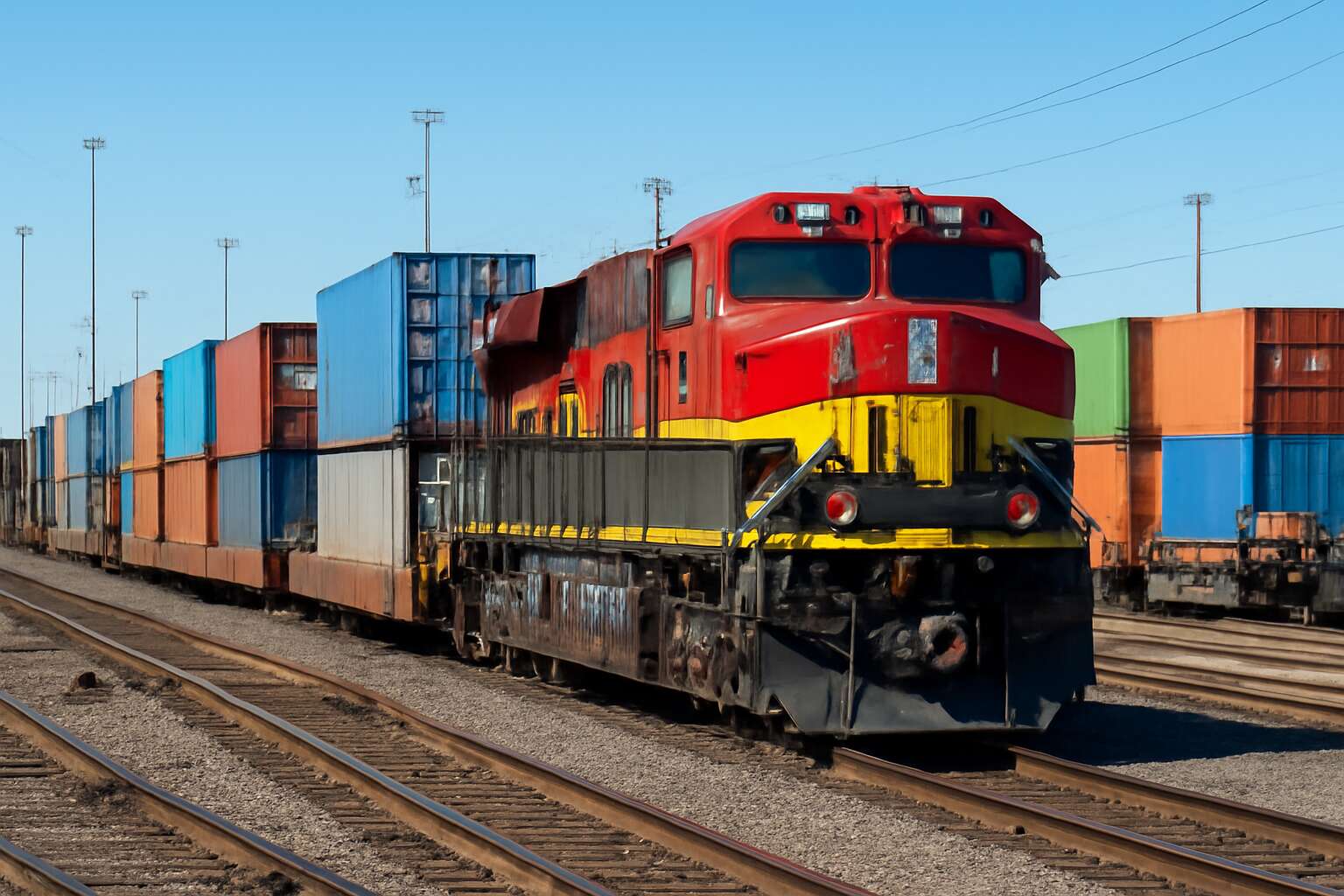
Overview of rail freight transport
Rail freight transport defined and scope
Rail freight transport is the quiet engine of commerce, moving heavy goods across long distances on steel rails with remarkable efficiency. So, what is rail freight transport? In essence, it’s the movement of goods by train—bulk commodities and containers—over a network guided by timetables and interchanges. ‘Rail freight is the backbone of trade,’ says a South Africa logistics veteran.
Across South Africa’s landscapes, the system links mines to ports and urban hubs, stretching into regional corridors and cross-border routes that keep suppliers connected.
- Bulk commodities like coal, ore, and grain
- Containerised freight for intermodal movement
- Intercity and cross-border flows
Its scale brings efficiency, reliability and a smaller carbon footprint to long-haul logistics. For South Africa, rail freight transport remains a strategic pillar—connecting mines, manufacturers and markets with steady, scalable momentum. It may not flash a siren, but it reliably moves the heavy stuff where it needs to go.
How rail freight works at a high level
In South Africa, rail freight moves hundreds of millions of tonnes-kilometres each year, quietly underpinning the engine of industry. what is rail freight transport? It’s the movement of goods by train—bulk commodities and containers—across a vast, steel-laced network guided by timetables and interchanges.
At a high level, the system channels cargo from mine or mill to market through a few steady motions:
- Extensive networks linking inland hubs to ports
- Timetables and interchanges that swap cargo between trains and other modes
- Intermodal terminals and standardized containers for seamless handoffs
Smarts lie in coordination, scale and consistent rhythm: from loading yards to border crossings, journeys are orchestrated for efficiency, reliability, and a smaller carbon footprint on long hauls. This quiet choreography powers South Africa’s regional corridors and cross-border flows, connecting suppliers to markets with steady momentum.
Key terms and concepts in rail freight
Rail freight in South Africa moves with quiet efficiency that underpins industry, tallying hundreds of millions of tonne-kilometres each year. So, what is rail freight transport? It’s the movement of goods by train—bulk commodities and containers—guided by timetables and interchanges, stitched into long journeys that bypass road chaos.
Key terms and concepts unfold like a refined etiquette manual for freight: intermodal terminals swap cargo between trains and trucks; containers ride the rails from mine to market; interchanges and unit trains keep rhythm and reliability intact.
- Intermodal terminals
- Containers and unit trains
- Interchanges
- Timetables and yard operations
These elements translate into scale, reliability, and a leaner carbon footprint on long hauls, shaping South Africa’s regional corridors and cross-border flows. From loading yards to border crossings, the choreography keeps suppliers nimble and markets well supplied.
The role of rail in modern logistics
In a country where congestion is a daily audition, rail quietly moves hundreds of millions of tonne-kilometres each year—the unsung engine of progress. If you ask what is rail freight transport, the answer sits in plain language: the movement of goods by train, guided by schedules and interchanges that stitch together vast journeys with predictable reliability.
In modern logistics, rail links mines and manufacturers to ports and retailers, weaving long journeys into dependable flows. The choreography—timelines, yards, and cross-border handoffs—lets suppliers stay nimble and inventories stay lean, even when road networks swell with holiday traffic.
Scale brings confidence, reliability, and a surprisingly lean carbon footprint on long hauls, reshaping South Africa’s regional corridors and cross-border flows. From loading yards to border crossings, rail keeps markets supplied with discreet power and quiet efficiency.
Key components of the rail freight system
Railcars, locomotives, and rolling stock
South Africa’s logistics pulse runs on steel rails, moving essential commodities across vast landscapes. A single freight train can replace hundreds of trucks, trimming road wear and emissions in one quiet pull. When you ask what is rail freight transport, imagine a patient giant ferrying ore, grain, and consumer goods with steady, almost ceremonial reliability.
Railcars are the payload carriers. They come in forms tailored to cargo—boxcars, tank cars, flatcars, and covered hoppers—each engineered for a specific challenge on long routes.
- Boxcars for general freight
- Tank cars for liquids
- Flatcars for heavy or oversized loads
- Covered hoppers for powders and granules
Locomotives supply the muscular force, diesel or electric, while rolling stock pieces combine to maintain cadence, braking, and safety across continents of track. In South Africa’s corridors, maintenance and compatibility matter as much as horsepower.
Rail network, terminals, and interchanges
Across South Africa, a rail network spanning thousands of kilometres moves goods with patient reliability. So, what is rail freight transport? It is a patient giant ferrying ore, grain, and consumer goods along corridors that never sleep.
Key components of the system—rail network, terminals, and interchanges—shape every journey. They form the spine that guides capacity, flow, and safe handoffs along the vast map of tracks.
- Rail network—the routes, gauges, and capacity that define every mile
- Terminals—where cargo is loaded, sorted, and consolidated for onward leg
- Interchanges—hubs where trains hand off freight and optimize routing
In South Africa, efficient networks shorten dwell times, speed deliveries, and knit inland corridors into a seamless tapestry. The trio—rails, yards, and interchange points—keep commerce moving with quiet precision.
Intermodal hubs and transshipment facilities
Intermodal hubs and transshipment facilities are the quiet engines behind rail freight’s patient cadence. They receive, consolidate, and re-route cargo with minimal friction, turning long-haul runs into precise handoffs. For what is rail freight transport, these nodes reveal the method: cargo moves steadily from rail to road or between rails, never losing tempo!
- Intermodal yards where trains are loaded, sorted, and staged for the next leg
- Transshipment facilities that transfer cargo between lines or modes
- Integrated drayage and terminal services for efficient last-mile links
- Advanced yard management and dwell-time reduction measures
In South Africa, efficient intermodal hubs knit inland corridors into a seamless tapestry, sustaining capacity, accuracy, and safety across the system.
Shippers, carriers, and freight forwarders
Rail freight moves with the quiet authority of a pendulum, sizing the rhythm of commerce to fit every mile. In the SA landscape, a single shipment survives the long haul because it travels with a three-voice choir: shippers, carriers, and freight forwarders. So, what is rail freight transport? It is not a solo performance but a disciplined trio whose harmony clears bottlenecks, trims dwell time, and keeps goods marching toward their destinies.
Key players and their quiet power:
- Shippers who chart demand, align documentation, and approve timelines
- Carriers that move with horsepower and timetable discipline
- Freight forwarders who orchestrate routes, consolidate cargo, and clear customs
In South Africa, these roles merge with terminal operators and drayage networks to deliver seamless inland journeys. The choreography keeps freight moving through corridors where containers meet wagons, and reliability becomes a competitive edge.
Maintenance, safety, and compliance infrastructure
In the freight world, quiet reliability beats flash and fireworks every time. So, what is rail freight transport? It’s not a random hop between hubs—it’s a disciplined, maintenance-backed system that keeps goods moving on a timetable.
Maintenance, safety, and compliance infrastructure keep that system trustworthy. The backbone features robust track health programs, wheel-rail condition monitoring, and scheduled rolling stock maintenance to prevent surprises on the line.
- Track infrastructure and inspection regimes
- Rolling stock maintenance and component lifecycle
- Signaling, telemetry, and control systems
- Safety management and regulatory compliance programs
In the South African context, these elements connect with terminal operations and drayage to deliver reliable inland journeys. If you’re wondering what is rail freight transport in practice, this triple-layer foundation shows it. Operators invest in training, audits, and incident reporting, turning risk into a managed routine instead of chaos.
How rail freight transport works in practice
Shipment lifecycle from origin to destination
In South Africa, rail freight accounts for roughly 15% of the total freight task, a quiet backbone that keeps industry moving while city lights pulse. So, what is rail freight transport? In practice, it is the movement of goods by heavy steel carriages along a network of tracks, from origin to destination, stitched together by timetables, yards, and the patient cadence of locomotives.
In practice, the shipment lifecycle unfolds like this:
- Origin pickup and loading at the shipper’s facility
- Long-haul movement through corridors and interchanges
- Interchange and transshipment at a terminal
- Arrival at the destination yard, unloading, and handover for last-mile delivery
Track-and-trace, safety protocols, and meticulous documentation keep the journey calm amid iron storms, turning a claustrophobic network into a reliable heartbeat of commerce as it threads across South Africa’s rail corridors.
Scheduling, capacity management, and routing
In the puzzle of what is rail freight transport, the answer lies in a rhythm: scheduled departures, capacity management, and smart routing. It begins at the origin yard where timetables set the tempo, then travels along corridors that stretch across South Africa, listening to signals and the patient cadence of locomotives.
In practice, the workflow tightens into a few core moves:
- Pre-trip planning and load window alignment to protect service levels
- Dynamic capacity management balancing demand with available track and yard space
- Routing optimization that considers interchanges, crew availability, and weather
Each step threads through yards, interchanges, and terminals, turning potential chaos into a dependable heartbeat for South Africa’s freight corridors. The result is a seamless flow where shipments arrive on schedule, despite the vast iron geography shaping every journey.
Cargo handling, loading, and unloading procedures
South Africa’s rail network keeps moving long after the station gates close. In practice, what is rail freight transport? It’s the careful choreography of moving goods by rail—from loading at origin yards to passage through interchanges and onward to final delivery. The rhythm rests on precise cargo handling and disciplined loading and unloading, performed by well-rehearsed teams.
- Cargo handling: securing, palletization, labeling to protect stability and traceability.
- Loading procedures: ramp alignment, forklift coordination, weight distribution checks.
- Unloading procedures: safety briefings, document handover, yard clearance.
These hands-on steps translate into safer yards, predictable schedules, and smoother handoffs across South Africa’s freight corridors.
Documentation, bills of lading, and regulatory compliance
In South Africa’s freight corridors, a shipment travels not only on steel but through a living ledger of rules and records. In practice, what is rail freight transport? It’s the disciplined movement of goods by rail—from origin yards to interchanges and on to final delivery—anchored by careful documentation and regulatory oversight.
Documentation, bills of lading, and regulatory compliance are the quiet engines behind the scene, guiding every handoff with certainty. The journey unfolds across yards, ramps, and interchanges, with signatures, stamps, and track-and-trace entries turning movement into accountability.
- Bill of lading and waybill coordination to match cargo and consignee
- Export and import declarations, permits, and sector-specific authorisations
- Customs clearance notes, safety data, and regulatory compliance checklists
- Document handovers, audit trails, and traceability records across interchanges
Taken together, these documents ensure safer yards, tighter risk management, and more predictable transit times across South Africa’s freight network.
Tracking, visibility, and digital tools
So, what is rail freight transport in practice? It is the disciplined movement of goods by rail—from origin yards to interchanges and on to final delivery—anchored by strict documentation and real-time data. A single intermodal move can replace hundreds of truck kilometres, shrinking road congestion and lowering emissions while lifting reliability across South Africa’s freight corridors.
Tracking, visibility, and digital tools keep the journey transparent. Key capabilities include:
- Real-time location feeds and ETA updates
- Automated handoffs and track-and-trace at interchanges
- End-to-end documentation and audit trails accessible to all parties
Those elements knit yards, ramps, and interchanges into a safer, more predictable network. In practice, operators rely on the digital ledger to turn movement into accountability across South Africa’s rail system.
Security and risk management in rail logistics
So, what is rail freight transport in practice? It is a disciplined movement of goods by rail—from origin yards to interchanges and on to final delivery—anchored by strict documentation and real-time data. A single intermodal move can replace hundreds of truck kilometres, a quiet revolution that eases road congestion and steadies reliability across South Africa’s freight corridors.
Security and risk management sit at every junction, turning potential chaos into choreography. We tighten access, seal containers, and monitor interchanges with data-driven vigilance.
- Tamper-evident seals and locked containers
- Real-time exception alerts and incident logging
- Chain-of-custody documentation accessible to stakeholders
With risk scoring, contingency planning, and rigorous audits, the system converts uncertainty into predictable throughput—keeping the rails safe and reliable. We often consider what is rail freight transport when we plan risk controls.
Benefits, challenges, and environmental impact
Cost efficiency, fuel economy, and long haul advantages
In practical terms, what is rail freight transport? It’s bulk logistics moved by steel rails that can cut energy use by up to 30% on long hauls and deliver dependable transit windows.
- Cost efficiency through high capacity and lower fuel per tonne-km
- Reliability with scheduled timetables even during peak periods
- Reduced road congestion and wear, easing urban logistics pressure
I’ve seen shippers enjoy cost efficiency, reliability, and the ability to move vast volumes without congesting roads.
Yet challenges persist: upfront capital for locomotives and wagons, needs for reliable terminal operations, and network constraints that can slow even well-planned routes. In South Africa, gauge parity and electrification gaps matter for cross-border flows.
The environmental impact of rail freight is compelling: rail’s fuel economy and lower emissions per tonne-km underpin the long haul advantages of moving bulk cargo by rail, especially across continental corridors.
Reliability, service levels, and network resilience
What is rail freight transport? It’s bulk logistics moved by steel rails, delivering high-capacity movement with energy efficiency and dependable transit windows. In South Africa, it moves coal, minerals, and agri-products with steady reliability.
- High capacity and lower fuel per tonne-km drive cost efficiency.
- Scheduled timetables boost reliability during peak demand.
- Less road congestion eases urban logistics pressures.
Yet challenges persist: upfront capital for locomotives and wagons, reliable terminals, and network constraints that slow even well-planned routes. In South Africa, gauge parity and electrification gaps affect cross-border flows.
The environmental impact is compelling: rail’s fuel economy and lower emissions per tonne-km underpin long-haul advantages across continental corridors. It offers a cleaner energy footprint with fewer urban air burdens.
Reliability, service levels, and network resilience keep shipments on track when storms or congestion threaten schedules.
Environmental benefits and emissions reduction
In a compact view, what is rail freight transport? It is bulk logistics moved by steel rails, delivering movement with energy efficiency that highway trucking rarely matches. The benefits are tangible: lower unit costs, favorable energy per tonne-kilometre, and reliable transit windows for peak demand. In South Africa, steel, coal, minerals, and agri-products move with fewer trucks on crowded corridors, easing urban congestion!
Yet there are headwinds: upfront capital for locomotives and wagons, and network constraints that slow even well-planned routes. Cross-border flows hinge on gauge parity and electrification gaps, while maintenance and regulatory alignment can temper growth.
Environmental benefits and emissions reduction define rail’s appeal. Rail’s fuel economy and lower emissions per tonne-kilometre translate into advantages across continental corridors, especially when paired with electrification and green energy. The result is a cleaner energy footprint and a visible easing of urban air burdens as freight shifts from road to rail.
Common challenges and ways to mitigate risk
Across South Africa’s corridors, what is rail freight transport reveals a quiet powerhouse. “Rail freight hauls the heavy stuff with a lighter footprint,” a veteran planner says. So, what is rail freight transport? It is bulk logistics moved by steel rails, delivering energy efficiency that trucks rarely match.
Benefits are tangible on the balance sheet and skyline.
- Lower unit costs and strong energy efficiency per tonne-kilometre
- Reliable transit windows for peak demand
- Reduced urban congestion and quieter cities
Yet headwinds persist, demanding strategy and patience.
- Upfront capital for locomotives and wagons — phased procurement
- Network constraints that slow routes — capacity planning
- Cross-border gauge and electrification gaps — harmonization
- Maintenance and regulatory alignment — proactive programs
Environmental benefits and emissions reduction define rail’s appeal. Electrification and green energy partnerships sharpen the footprint, making rail a cleaner choice for freight as it moves from road to rail and eases urban air burdens in SA.
Rail versus other transport modes: when to choose rail
Across South Africa’s corridors, rail quietly powers the economy. In SA, what is rail freight transport? It’s bulk logistics moved on steel rails, engineered for energy efficiency. Benefits show on the balance sheet and in quieter skylines.
- Lower costs per tonne-km and scalable capacity
- Predictable transit windows for peak demand
- Reduced urban congestion and quieter operations
Challenges persist, demanding strategy. Upfront capital for locomotives and wagons requires phased procurement; network constraints slow routes; cross-border gauge and electrification gaps complicate planning; maintenance and regulatory alignment demand proactive programs.
Environmental impact: Rail reduces emissions as freight shifts from road to rail. Electrification and green-energy partnerships sharpen the footprint, easing urban air burdens in SA. Rail versus other transport modes favors long-haul, heavy loads on reliable corridors with steady demand.
Regulatory considerations and incentives
So what is rail freight transport? In South Africa’s logistics landscape, it’s bulk movements on steel rails engineered for energy efficiency. The benefits show up on the bottom line and in quieter skylines: lower costs per tonne-km, scalable capacity, and predictable transit windows that keep peak season honest.
Yet challenges persist. Upfront capex for locomotives and wagons requires phased procurement; network constraints slow routes; cross-border gauge and electrification gaps complicate planning; maintenance and regulatory alignment demand proactive programs that never sleep.
Environmental impact: rail moves freight from crowded highways to cleaner rails, trimming emissions. Electrification and green-energy partnerships sharpen the footprint, delivering air-quality dividends for SA cities while keeping heavy hauls humming.
Regulatory considerations and incentives are the quiet engine rooms: safety, interoperability, and cross-border compliance shape every schedule, while subsidies for electrification and fleet renewal reward long-range reliability.
Industries and use cases for rail freight transport
Industry-specific applications and commodities
What is rail freight transport? In South Africa, it moves the backbone of our economy across vast distances, from remote mines to coastlines. It can trim costs and emissions, with bulk rail moves offering meaningful savings per tonne versus road transport. Understanding what is rail freight transport helps explain its appeal.
Industries rely on rail for steady, dependable movement of heavy loads that simply can’t be rushed. Consider these use cases and commodities:
- Mining and bulk ores (coal, iron ore)
- Agriculture and agriproducts (citrus, grain)
- Automotive parts and manufacturing components
- Chemicals and energy equipment
In my years visiting rural depots, I’ve seen trains become lifelines. Long-term reliability, interchanges, and the capacity to move big cargoes without clogging roads make rail a resilient, people-centered choice. It links farms to markets, mines to mills, and families to opportunity.
Regional and global trade patterns
Across South Africa, rail freight moves the backbone of our economy, linking remote mines to coastal hubs. So, what is rail freight transport? It’s a long-haul, high-capacity system designed to move bulk loads efficiently, trimming costs and emissions versus road moves.
Consider these regional use cases:
- Regional distribution for steady, high-volume orders
- Cross-border flows and interchanges that smooth capacity
- Project and capital-equipment moves that ride the rails’ heft
Rail’s practicality isn’t just numbers; it’s about resilience—linking farms to markets, mines to mills, and communities to opportunity. From rural depots to interchanges, rail sustains throughput even when road networks buckle under congestion!
Case studies of successful rail freight implementations
“Resilience in motion,” a logistics executive notes. The answer to what is rail freight transport is simple: a long-haul, high-capacity system designed to move bulk loads efficiently, trimming costs and emissions versus road moves. Across South Africa, rail links mines to ports and farms to markets, keeping throughput steady even when roads buckle!
Industries and use cases center on high-volume, long-distance flows that keep supply chains running. Consider these real-world applications:
- Mining and minerals logistics: concentrates, ore, coal
- Agriculture and agri-processing: grains, sugar, fertilisers
- Industrial equipment and project cargo: turbines, transformers, machinery
Case studies show rail delivering reliability for coastal hubs, regional depots, and cross-border flows. In practice, these moves reduce road congestion, improve predictability, and unlock opportunities for communities along the corridor.


0 Comments