
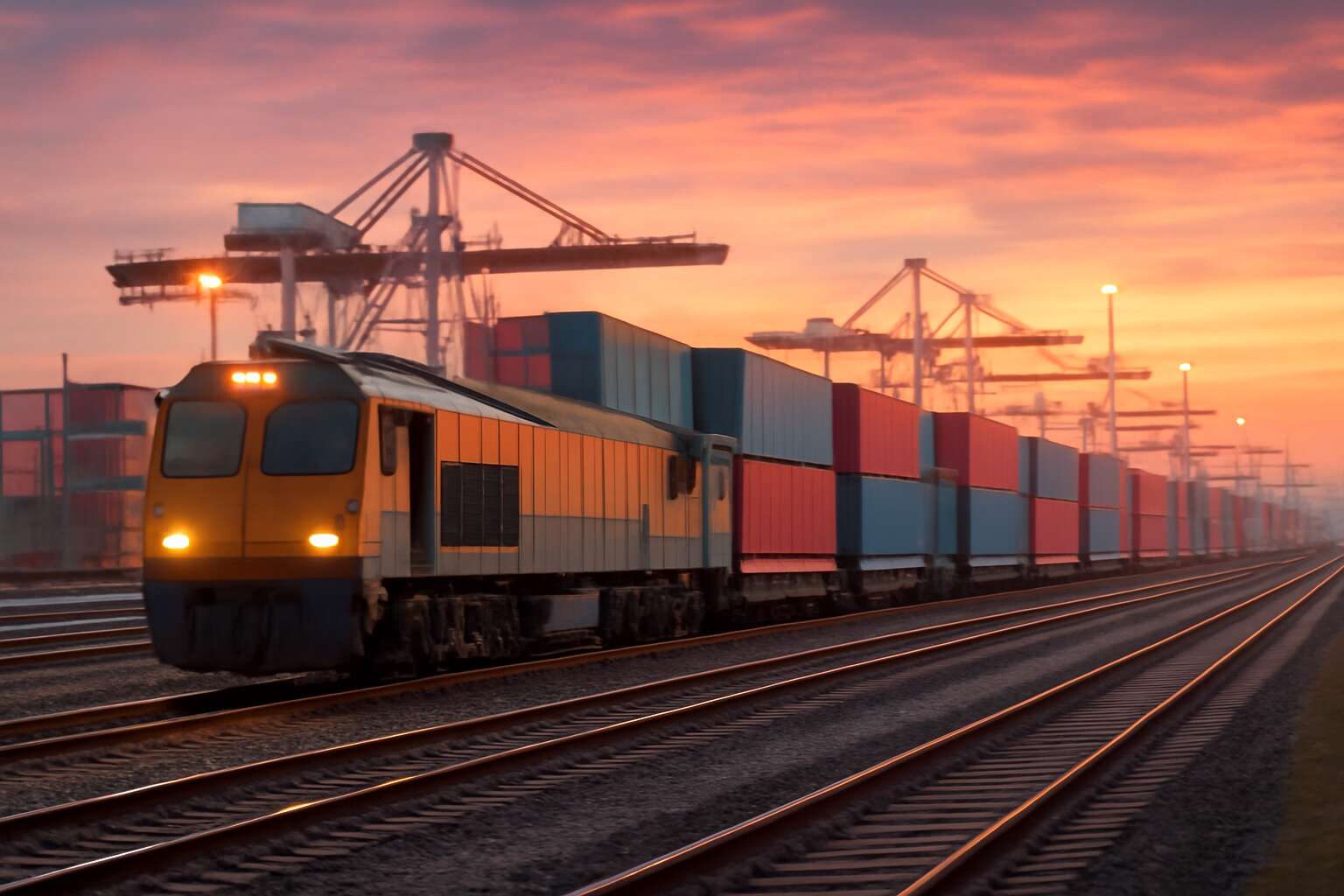
Rail Freight Essentials and Market Context
What is rail freight and who uses it?
Rail freight quietly underpins South Africa’s economy, cutting emissions by up to 80% per ton-km versus road. This freight transport by rail carries bulk loads from mines to ports and from factories to depots, proving reliable across vast distances.
Rail freight essentials center on scale, safety, and seamless connectivity. Key capabilities include:
- Bulk capacity for minerals, coal and grain
- Intermodal links to ports and distribution hubs
- Reliable scheduling across long corridors
Market context reveals who uses it: mining houses, manufacturers, agri-exporters, and logistics providers. In South Africa, Transnet Freight Rail and private operators depend on this backbone to move ore, fruit, and vehicle components while easing road congestion.
Key metrics and indicators for rail cargo
Rail freight essentials translate into measurable reality through scale, safety, and seamless connectivity. In practice, reliability across long corridors defines success, not merely raw capacity. For South Africa, the freight transport by rail backbone is judged by how often trains arrive on time, how smoothly interchanges occur, and how efficiently ore, fruit, and components move to their next leg. Market signals hinge on load factors, ton-kilometres, and the balance between speed and safety—metrics that steer investment and policy as surely as forecast curves.
Key indicators to watch include:
- On-time delivery (OTD) percentage
- Interchange dwell times and yard throughput
- Tons moved per corridor (ton-km)
- Fleet utilization and asset productivity
These figures illuminate resilience and capacity alignment across South Africa’s rail network, guiding decisions for shippers and operators alike!
Major rail corridors and intermodal hubs
The rail spine of South Africa carries more than cargo—it sustains cities from the veld to the port. Freight transport by rail hums with legible order, turning delay into a memory and, as one operator notes, keeping the country moving on schedule.
Major corridors stitch Gauteng to the coast and inland hubs, weaving performance between mines, factories, and ports.
- Johannesburg–Durban corridor: bulk minerals and containers in steady flow
- Gauteng–Richards Bay corridor: inland production to the coast
- Johannesburg–Cape Town axis: long-haul container and automotive freight
- Coega/Ngqura intermodal link: port-to-market connectivity for eastern routes
Intermodal hubs anchor seamless interchange, with City Deep in Johannesburg as a central node and Durban, Richards Bay, and Ngqura linking inland production to coastal markets. Freight transport by rail becomes a choreography—timing, safety, and capacity moving in lockstep.
The network is timing and trust, a measured poetry of steel.
Rail freight vs other modes: a quick comparison
Across South Africa, freight transport by rail moves millions of tonnes of cargo each year, a quiet powerhouse that keeps mines exporting, factories humming, and ports loading on schedule. A recent industry view highlights rail’s ability to shift heavy loads with clockwork reliability, squeezing efficiency from long hauls and reducing road traffic snarls. The magic lies in cadence: trains run on predictable timetables, their steel trails forming the backbone of an economy that cannot afford delay.
Market context is a blend of growing demand and careful stewardship. Operators balance capacity, safety, and aging assets, while shippers chase intermodal flexibility that links inland production with coastal markets. Weavers of the network emphasize seamless interchange at hubs and corridors, where every container finds the next mile with minimal friction.
- Lower energy per tonne moved compared with road
- Large payloads reduce handling cycles
- Scalable capacity across major corridors
In this story, timing is the true currency—steady, strategic, and exactly on track.
Historical trends shaping rail logistics
Across South Africa, freight transport by rail moves millions of tonnes each year, a quiet powerhouse that keeps mines exporting and ports loading on schedule. Cadence, safety, and aging asset care are the core. Trains follow clockwork timetables, turning long hauls into reliable, energy-efficient journeys that ease road congestion and keep rural towns connected.
Historical trends shaping rail logistics hint at steady reinvention.
- Public investment alongside private capacity
- Intermodal hubs easing interchange
- Digital platforms for real-time visibility
- Maintenance discipline extending asset life
Market context today blends growing demand with careful stewardship. Operators balance capacity, safety, and aging fleets, while shippers chase intermodal flexibility linking inland production to coastal markets, sustaining towns along the line.
Benefits and Sustainability of Rail-Based Freight
Environmental impact and carbon efficiency
In South Africa, freight transport by rail is more than a logistics choice; it is a climate-conscious spine that powers mining and manufacturing. A single freight train can shoulder the load of dozens of trucks, transforming corridors of movement into impressive, low-emission arteries!
- Lower carbon intensity per tonne-kilometre
- Higher payloads with less fuel per ton moved
- Fewer road congestion and wear on urban infrastructure
Beyond the numbers, rail-based logistics reduces pollution and urban noise while supporting energy security. Regenerative braking and efficient electrified corridors in key regions help make the carbon footprint of freight lighter over time, aligning growth with sustainable development goals.
Cost savings and total cost of ownership
In South Africa, freight transport by rail is more than a choice; it’s a disciplined craft that trims the noise of the road and steadies the economy’s pulse. A freight train can move hundreds of tonnes with a gentler footprint, turning long corridors into elegant, low-emission arteries.
The economics are as lyrical as they are practical: lower fuel bills, fewer drivers required per tonne moved, and depreciation over longer asset life. Key cost advantages include:
- Lower fuel consumption per tonne-km
- Fewer road maintenance costs and urban disruption
- Higher payloads and predictable uptime
- Longer asset life and smarter capital allocation
Total cost of ownership is not a number on a dashboard but a horizon—where reliability, regenerative braking, and electrified corridors cut emissions while keeping schedules. The result is growth that respects the land and the people who share the rails.
Reliability and on-time performance factors
In South Africa, the rhythm of rails is more than a route; it is a disciplined engine of growth. Freight transport by rail can move substantial tonnage over long distances while cutting energy use per tonne-km by up to 60% compared with road, delivering reliability that traders feel in the track’s steady pulse.
Reliability and on-time performance hinge on steady schedules, robust infrastructure, and proactive maintenance. When networks maintain consistent headways and intermodal links synchronize seamlessly, shipments glide along predictable timelines—minimizing disruptions and maximizing uptime.
- Real-time fleet monitoring
- Preventive maintenance regimes
- Coordinated intermodal connections
Shared sustainability emerges from regenerative braking, electrified corridors, and the quiet efficiency of heavier payloads. The result is lower urban congestion and a gentler footprint—benefiting people, ecosystems, and the bottom line alike.
Capacity and scalability for growing freight needs
Across South Africa, freight transport by rail moves millions of tonnes, and energy use per tonne-km can drop by up to 60% versus road. That efficiency creates scalable capacity to meet growing demands without expanding road networks.
Benefits of this capacity come in several forms:
- Higher payloads per journey, lowering per-tonne costs
- Better utilization of intermodal hubs and rail corridors
- Resilience during peak seasons with predictable schedules
Sustainability is baked in: regenerative braking, electrified corridors, and a quieter footprint reduce urban congestion and improve air quality. This makes rail a forward-looking backbone for South Africa’s logistics.
Regulatory incentives and green financing options
Across South Africa, freight transport by rail moves millions of tonnes and cuts energy use per tonne-km by up to 60% compared with road. This efficiency becomes a strategic asset: higher-capacity movement, predictable schedules, and a gentler urban footprint—amplified by regulatory incentives and green financing that make rail even more compelling.
Regulatory incentives translate into tangible action: line upgrades, accelerated depreciation on rolling stock, and advantageous access to key freight corridors that tilt the economics toward rail. Green financing options, including green bonds and concessional loans, reduce upfront risk and speed investments in infrastructure and rolling stock.
- Regulatory incentives: tax credits, depreciation, reduced access fees
- Green financing options: green bonds, concessional loans, blended finance
Rail Freight Operations and Intermodal Logistics
Network design, routing, and scheduling
In South Africa, optimized rail routing can shave up to 25% off transit times, turning long hauls into reliable deliveries. Rail freight isn’t just moving cargo; it’s a strategic nerve center for inventory and cost— a quiet revolution under steel!
Rail Freight Operations and Intermodal Logistics Network design, routing, and scheduling hinge on alignment between yards, terminals, and rolling stock. Hub-and-spoke versus point-to-point layouts, precise train sequencing, capacity forecasting, and service windows redefine performance. For freight transport by rail, speed must meet reliability.
- Network design: choosing hubs, cross-loading opportunities, and buffer zones
- Routing and scheduling: dynamic pathing, ETA accuracy, and contingency slots
- Intermodal coordination: seamless rail-road handoffs and real-time visibility
In South Africa’s evolving logistics landscape, visibility, data, and adaptive planning keep networks resilient. The human element—planners, operators, and inspectors—ultimately determines whether the system hums or stumbles.
Intermodal transfer and terminal operations
One well-timed intermodal move can replace hundreds of truck trips in a day, slashing road congestion and fuel burn. In South Africa, freight transport by rail is more than movement—it’s a carefully choreographed flow between inland depots, coastal terminals, and hinterland hubs. Rail operations hinge on efficient intermodal transfers and precise terminal handling that keep trains and containers aligned!
- Arrival assessment and car/container side processing
- Container handling, seal checks, and staging for the next leg
- Rail-road handoffs coordinated for seamless transfer
- Documentation and queue clearance within service windows
Intermodal transfer and terminal operations turn cargo into reliable service. With tight timing, train sequencing and buffer zones protect reliability.
Real-time visibility and adaptive planning keep networks resilient. The human element—planners, operators, and inspectors—makes the difference, turning data into dependable throughput.
Rolling stock and fleet management basics
One well-timed intermodal move can replace hundreds of truck trips in a day, a punchy reminder that rail cargo is more than metal and rails. In South Africa, freight transport by rail offers a reliable backbone for moving mass volumes with lower road congestion and fuel burn. Rail operations depend on rolling stock availability, tight sequencing, and fleet discipline—ingredients that keep departures aligned with arrivals.
Rolling stock and fleet management basics keep trains moving.
- Locomotives and traction systems matched to task and grade
- Freight wagons sized for commodity type and peak-season demand
- Intermodal containers and chassis compatibility across borders
- Preventive maintenance to minimize unscheduled stops
Real-time visibility and adaptive planning keep networks resilient. The human element—planners, yard supervisors, and inspectors—adds pragmatism, turning data into dependable throughput.
Export and import workflows across borders
“Rail is the circulatory system of South Africa’s economy,” a veteran planner says. Freight corridors stitch exporters to importers with predictable timetables and less road churn. Across borders, intermodal routes braid Durban’s ports with inland hubs, aligning export workflows with customs and container handling—proof that freight transport by rail keeps trade flowing.
Export and import workflows hinge on harmonised documentation and tight border coordination between terminal operators and railways. Real-time visibility and flexible scheduling shrink dwell times, creating a resilient network! Key steps in the export/import workflow include:
- Pre-shipment coordination and container readiness
- Export/import customs clearance and transit documentation
- Cross-border intermodal handoffs and terminal sequencing
- End-to-end visibility with tracking and ETAs
Across all borders, skilled planners translate data into dependable throughput, sustaining South Africa’s growing logistics ambitions for exporters and importers alike.
Real-time tracking and visibility technologies
“Rail is the lifeblood that keeps rural towns fed,” a veteran planner says. freight transport by rail quietly moves heavier loads with less road churn across South Africa, threading farms to markets and ports.
Real-time tracking and visibility technologies stitch the network into a living map. GPS beacons, RFID tags, and cloud dashboards let operators see trains as they move from yard to inland hub, forecast ETAs, and shrink dwell times. This is freight transport by rail in action for South Africa’s exporters.
- End-to-end container visibility from origin to destination
- Real-time ETAs and dwell-time alerts
- Condition monitoring of wagons and track for proactive maintenance
Ultimately, the system hums with human care, turning data into predictable throughput and steady livelihoods.
Safety and handling protocols in rail freight
“Safety is the shadow that guides every coupling,” a seasoned yard master murmurs. In freight transport by rail, safety and handling protocols are the quiet backbone of every move. From loading yards to inland hubs, disciplined practices guard people and cargo, turning heavy metal into a dependable artery for South Africa’s towns and markets.
- Securement and lashings for containers and bulk loads
- Safe loading and unloading with approved equipment
- Hazardous materials handling, labeling, and segregation
- Personal protective equipment, training, and near-miss reporting
- Track protection, signalling, and yard safety coordination
Kept in this rhythm, routine becomes safeguard—each shift, each coupling watched, each handover logged—ensuring the rails stay a steadfast conduit for commerce that never sleeps.
Regulatory Framework, Compliance, and Risk Management
Regulatory bodies and standards for rail transport
In South Africa, freight transport by rail threads through the economy like a shadowed artery, silently carrying bulk minerals and grain across long horizons. A single hour of downtime can ripple through schedules and margins, proving that regulation and resilience are as vital as iron and wheels.
Regulatory bodies and standards mold how rail operators pursue safety and reliability. The National Rail Safety Regulator (NRSR) enforces safety, licensing, and audits under the Rail Safety Regulator Act, while the Department of Transport frames policy. Compliance rests on a mature safety culture and adherence to recognized standards such as ISO frameworks; there are strict rules for hazardous materials handling and incident reporting.
- Safety Management Systems aligned with regulator audits
- Operator licensing, registration, and incident reporting
- Hazardous materials handling and cross-border compliance
Beyond paperwork, risk management becomes a living discipline—continuous inspection, data-driven risk assessments, and corrective action turn regulatory obligation into operational resilience.
Track access, rights of way, and pricing regimes
In South Africa, freight transport by rail moves mountains of ore and grain across long horizons!
The Regulatory Framework blends the Rail Safety Regulator Act, Department of Transport policies, and licensing duties. Track access and rights of way define who may run where, while pricing regimes balance investment with predictability.
- Track access arrangements and non-discriminatory provisioning
- Rights of way management and corridor protection
- Tariffs and incentive-based pricing for capacity and resilience
Compliance remains a living discipline—audits, incident reporting, and data-driven risk assessment convert regulation into resilience.
Risk management supports timetable reliability and safety across corridors.
Security, contamination prevention, and incident reporting
A well-functioning system supports freight transport by rail, thriving on a robust regulatory backbone that keeps lines open and cargo moving. The Regulatory Framework fuses safety mandates, licensing duties, and policy directives into a clear map of who can run where and under which conditions.
Compliance is a living discipline, turning rules into resilience through audits, incident reporting, and data-driven risk assessment.
- Audits and inspections
- Incident reporting and investigations
- Contamination prevention and security controls
- Data-driven risk assessment and corrective action
Risk management strengthens timetable reliability and corridor protection, while contamination prevention and incident reporting become habitual safeguards. With security measures calibrated to parry threats, rail cargo moves with greater predictability along South Africa’s key routes.
Cross-border and customs considerations in rail shipping
A rock-solid regulatory framework is the unsung engine of rail logistics—without it, even the most spirited locomotive stalls. In South Africa, safety mandates, licensing duties, and border rules fuse into a clear map of who may run where and under what conditions.
- Customs clearance and transit documentation
- HS codes, tariff classifications, and invoicing accuracy
- Licensing, track access rights, and operator safety standards
Compliance is a living discipline—audits, incident reporting, and data-driven risk assessment turn rules into resilience. For cross-border rail shipping, this means harmonized border procedures, SARS customs controls, and crystal-clear transit docs that keep wheels turning rather than waiting at the border.
Risk management strengthens timetable reliability and corridor protection; security measures and contamination controls become habitual safeguards. With these safeguards, freight transport by rail moves with greater predictability along South Africa’s key routes.
Insurance, liability, and contract risk management
In the dim glow of yard lamps, a solid regulatory framework acts as the engine’s quiet coal. In South Africa, safety mandates, licensing duties, and border rules map who may run where and under what conditions, shaping every movement of freight transport by rail.
Compliance is a living discipline; audits, incident reporting, and data-driven risk assessment turn rules into resilience. Insurance, liability, and contract risk management form the unseen shield that keeps cargo and carriers within the law.
- Insurance coverage: cargo, third-party liability, and contingent risk
- Liability frameworks and indemnities: caps, waivers, and recovery procedures
- Contract risk management: SLAs, force majeure, dispute resolution, and performance metrics
Across borders and tracks, risk management strengthens timetable reliability; audits and transparent transit documents fortify confidence and ensure freight transport by rail remains steady even in gusts of change.
Market Trends, Pricing, and Case Studies
Current demand drivers in rail freight markets
A single high-capacity freight train can move the equivalent of dozens of trucks, turning South Africa’s inland corridors into living arteries of commerce. Market trends in our region point to a durable shift toward intermodal paths, mining-to-port routing, and e-commerce-driven volumes that outpace traditional expectations.
- Intermodal hub expansion
- Reliability and cut-to-delivery windows
- Cross-border flows gaining speed under streamlined customs
Pricing in freight transport by rail rewards predictability. Long-term contracts, lower fuel exposure, and network efficiency translate into a steadier cost curve than ad hoc road moves. Yet volatility remains where congestion and maintenance collide with capacity.
Case studies from our South African network illuminate the promise: a regional producer shifted freight from road to rail, cutting handling damage and improving delivery cadence across a key corridor.
Pricing models and contract structures
Market trends in freight transport by rail are rewriting South Africa’s inland arteries. Intermodal volumes surge as mining-to-port routes gain tempo and cross-border flows sharpen under streamlined customs. Reliability and tighter delivery windows turn corridors into living commerce lines!
Pricing rewards predictability. Long-term contracts reduce fuel exposure and boost network efficiency, delivering a steadier cost curve than ad hoc road moves. Yet volatility lingers where congestion and maintenance collide with capacity.
In a South African case, a regional producer shifted freight from road to rail, cutting handling damage and improving cadence across a key corridor. Pricing models and contract structures now blend base rates with performance incentives and volume commitments.
- Fixed base rate with periodic adjustments
- Fuel-indexed pricing linked to a regional index
- Volume-based tiered discounts
- Service-level penalties/bonuses tied to on-time performance
Technology adoption: digital platforms and predictive analytics
Market trends are reconfiguring South Africa’s freight corridors, and I see the shifts in the yards. Intermodal volumes surge as mining-to-port routes accelerate and cross-border flows tighten under streamlined customs. In freight transport by rail, reliability and tighter delivery windows turn corridors into living commerce lines!
Pricing in this landscape rewards predictability. Long-term contracts reduce fuel exposure and boost network efficiency, delivering a steadier cost curve than ad hoc road moves. Yet volatility lingers where congestion and maintenance collide with capacity.
Case studies illuminate the impact. A regional South African producer shifted freight from road to rail, cutting handling damage and improving cadence along a key corridor. Technology adoption—digital platforms and predictive analytics—refines planning and resilience across the network, strengthening freight transport by rail.
- Digital platforms optimize scheduling and document flow
- Predictive analytics forecast demand, capacity and maintenance
- Real-time tracking and alerts tighten network governance
Industry case studies by sector (manufacturing, agriculture, automotive)
Double-digit gains in intermodal volumes are redefining South Africa’s freight corridors. Shippers chase reliability and precise delivery windows as yards and borders adapt to digital planning and smoother customs. Intermodal flows from mines to ports tighten, turning rail corridors into backbone lines that carry more than goods—they carry futures. Freight transport by rail is becoming the steadfast corridor for growth.
Pricing now rewards predictability. Long-term contracts reduce fuel exposure and steady the cost curve, making freight transport by rail more appealing than ad hoc road moves. Yet volatility lingers where congestion and maintenance collide with capacity.
Industry case studies across manufacturing, agriculture and automotive illuminate the shift, from better handling and cadence to resilience in supply chains.
- Manufacturing: smoother cadence and reduced damage in key corridors
- Agriculture: fresher produce with faster freight transport by rail from farm to market
- Automotive: tighter just-in-time deliveries and lower warehouse overhead
Challenges and opportunities in the coming years
Markets across South Africa are waking to a striking trend: intermodal volumes rise in double digits, turning rail corridors into reliable arteries of growth! Shippers chase reliability and precise delivery windows as yards embrace digital planning and smoother customs checks.
Pricing is shifting toward stability. Long-term contracts reduce fuel exposure and smooth the cost curve, making rail-based freight more attractive than ad hoc road moves. Yet volatility lingers where congestion and maintenance collide with capacity, especially on corridors linking mines to ports.
Case studies from manufacturing, agriculture, and automotive sketch a future where resilience becomes daily practice. Opportunities lie in digital scheduling, cross-border workflows, and smarter rolling stock management; challenges persist in capacity planning, maintenance windows, and aligning incentives across players.
- Capacity constraints and maintenance scheduling pressures impacting freight transport by rail
- Adoption of digital planning platforms and data sharing to smooth operations
- Cross-border and regulatory alignment improving transit times



0 Comments