
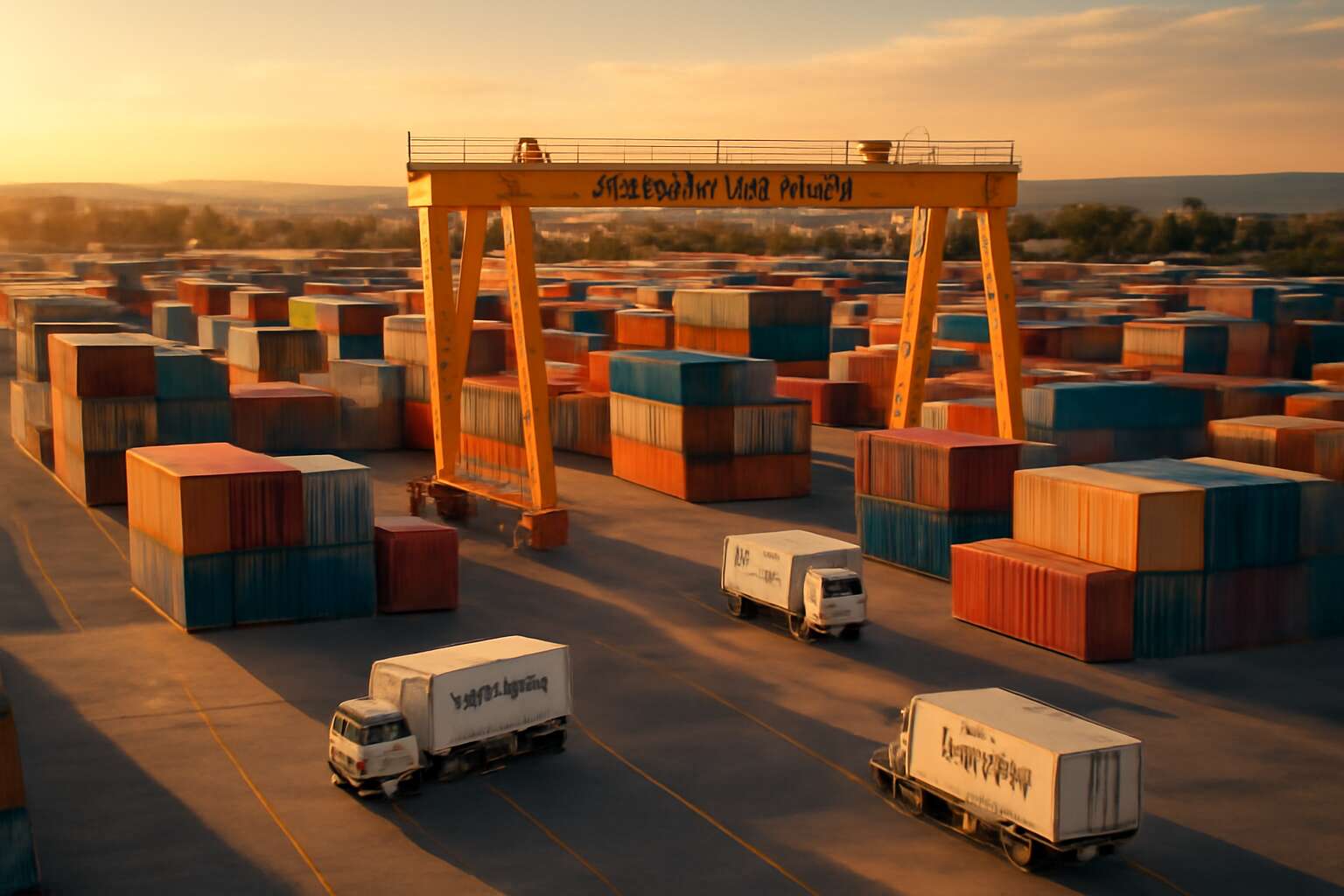
Wagga Wagga Freight landscape and key players
Market Overview: Demand and growth in the region
Wagga Wagga is quietly redefining regional freight dynamics, with throughput up 7% last year and a stubborn resilience in the face of occasional bottlenecks! The freight transport wagga landscape now hinges on reliable road and rail corridors that connect local producers to national markets. For South African readers, this mirrors the push toward predictable transit times and transparent pricing that underpin efficient supply chains.
Key players shaping the market are a mix of seasoned transport operators, local freight forwarders, and public‑private infrastructure bodies.
- Major transport operators
- Local freight forwarders
- Infrastructure authorities
Demand centers around agribusiness, manufacturing support, and regional distribution, with ongoing investments in road and rail upgrades lifting capacity and resilience for the years ahead.
Major freight operators and service types in the area
Wagga Wagga’s freight lanes hum like a midnight stave, steel rails catching moonlight while trucks murmur along the arterial roads. The landscape wears a patient, nocturnal grace, where timetables are talismans and every waypoint carries the weight of a region’s appetite. Freight transport wagga threads its way through the town’s pulse, a quiet, inexorable force.
- National road carriers delivering along the corridor
- Regional rail operators linking farms, mills and markets
- Local freight forwarders with agribusiness specialization
Service types in this corridor span road haulage, rail freight, warehousing, and temperature-controlled logistics, with upgrades lifting capacity and reliability. The tapestry is held by operators who balance tradition with modernity, ensuring predictable transit times for South African readers who crave transparent pricing and steady supply.
Important routes and logistics hubs serving Wagga
In Wagga Wagga, freight transport wagga moves with a nocturnal grace, a quiet engine powering regional appetite. A single shipment can set the week’s rhythm, and the town sustains itself on punctual meetings of road, rail, and warehousing—an unsung choreography of reliability.
Through the corridor run the Sturt Highway toward Adelaide and the Newell Highway toward Queensland, weaving the landscape into a continuous flow. The Bomen intermodal precinct anchors the network, where road and rail entwine to shorten cycles and safeguard markets.
- Bomen Intermodal Precinct, a crucial road-rail nexus
- Wagga Wagga Rail Terminal, handling regional grain and perishables
- Strategic road corridors along Sturt and Newell supported by local freight forwarders
From this quiet hub, operators balance heritage with modern systems, delivering predictable transit times and transparent pricing—the kind of steadiness South African readers recognise as the backbone of a thriving supply chain.
Seasonal trends impacting freight in Wagga Wagga
Wagga Wagga’s freight landscape runs on quiet, relentless efficiency. Industry data suggests about 60% of regional tonnage flows through the Bomen intermodal precinct, underscoring the town’s role as a logistics hot zone. The term freight transport wagga moves with nocturnal grace, powering regional appetite and keeping markets fed.
Key players anchor operations with local freight forwarders, rail-linked logistics providers, and road-haul specialists who keep schedules tight and prices transparent.
- Local freight forwarders and brokers ensuring last-mile reliability
- Rail-linked providers at Bomen Intermodal Precinct
- Road-haul operators serving the Sturt and Newell corridors
Seasonal trends tilt the workload: harvests lift grain and perishables, while rain can boost or suppress transport flows. Weather windows and market timing influence cycle times, keeping Wagga Wagga’s logistics network resilient.
Choosing a freight transport provider in regional NSW
Criteria for selecting a logistics partner
Regional NSW is a tapestry where freight transport wagga threads through dusty roads and bright markets alike. A compelling hook whispers that a single delay can ripple 48 hours through downstream operations, turning certainty into a winding labyrinth. The right partner turns rain into rhythm and makes the journey feel effortless.
Criteria for selecting a logistics partner should include reliability, capacity, network reach, safety, compliance, technology, transparency, and sustainability.
- Reliability and on-time performance
- Adequate capacity and regional coverage
- Safety records and regulatory compliance
- Real-time visibility and modern technology
- Cost alignment and transparent billing
These elements weave a trustworthy fabric across shipments, from regional hubs to Wagga’s doorstep.
Local versus national carriers: advantages and trade-offs
Choosing a freight transport wagga partner in regional NSW is less about size and more about rhythm. Local carriers offer intimate knowledge of dusty back streets and quick, flexible scheduling for the last mile, while national operators bring vast capacity and seamless cross-state reach. Both options carry clear advantages; the trick is fitting their tempo to your shipment’s journey and your budget, so delays don’t become a moving maze.
Here are the practical contrasts to weigh when edging toward a decision:
- Local carriers: close proximity to regional hubs, nimble scheduling, and a more personal touch at the doorstep.
- National carriers: expansive networks, higher capacity, and standardized processes for larger consignments.
- Trade-offs: local providers can be cost-effective but may offer lower scale; national players deliver consistency but require clear governance and documentation.
Whichever path chosen, freight transport wagga flows best when the rhythm feels right and trust is built over time.
Service levels, reliability, and coverage across the region
Every shipment has a tempo, and regional NSW knows the right carrier keeps the drumbeat steady. A veteran manager once quipped, “Delivery is 90 percent rhythm and 10 percent paperwork”—and it’s not far from the truth. The trick is a partner who can flex with your schedule, not fight it.
When you’re choosing a freight transport wagga partner, service levels and reliability aren’t decorative add-ons, they’re the brakes and accelerator. Local players excel at nimble, on-time last-mile, while national operators bring uniform processes and robust capacity. Coverage across the region should feel like a safety net, catching you whether the shipment heads to Wagga or beyond.
For readers plotting cross-continental routes from South Africa to Australian distribution hubs, the pattern holds: strong governance, clear documentation, and transparent tracking keep the rhythm intact. The right match reduces the entropy of freight and keeps your budget serenely in tempo.
Insurance, liability, and risk management considerations
One costly misstep can wipe out a month of earnings, and in freight transport wagga the fine print decides between steady drums and stalled shipments. Insurance, liability, and risk management aren’t afterthoughts; they’re the grammar that keeps the rhythm when delays or dockside mishaps occur. For readers in South Africa and Australia, the principle is the same: clarify who bears what in transit and where coverage applies.
Insurance should map to risks—loss, damage, theft, and delays—and cover both the carrier and any subcontractors. Liability limits should be stated plainly, with clear exclusions and a defined claims process.
- Transit insurance options
- Liability limits and exclusions
- Subcontractor risk management
Governance, documentation, and transparent tracking help prevent disputes before they start, while clear records keep the rhythm intact across handoffs and hubs. In regional NSW, this clarity matters as much as the wheels themselves—and it travels well for cross-continental routes.
Cost, efficiency and performance in Wagga freight
Understanding freight rates, surcharges and quotations
In Wagga, freight costs can swing by up to 15% per quarter. That volatility shapes every shipment.
Understanding freight rates, surcharges and quotations is how we keep costs predictable in freight transport wagga. We compare options, factor in timelines, and lock in prices when the market moves.
Here are common rate elements you should see in a quotation:
- Base linehaul rate
- Fuel surcharge tied to price indices
- Accessorials for liftgate, inside delivery, and notification charges
- Origin/destination surcharges and route distance
Efficiency and performance come down to planning, visibility, and reliable handoffs. We measure on-time delivery and accuracy to ensure value beyond price!
Visibility and tracking: ETA accuracy and updates
In freight transport wagga, cost discipline hinges on foresight. Quarterly price swings force us to map the base linehaul, fuel surcharges, and accessorials with precision, turning volatility into a navigable tide. By comparing options, weighing timelines, and locking in prices when the market moves, we keep shipments predictable and competitive for South Africa-based operations venturing into cross-border logistics.
Visibility and tracking are the quiet engines of performance. ETA accuracy matters, and timely updates prevent surprises at the dock.
- Real-time location updates
- Advance delay notifications
- Transparent ETAs and proofs of delivery
With these signals, efficiency translates to reliability; handoffs happen on schedule, and the narrative stays focused on value beyond price!
Mode options for the region: road, rail, and intermodal solutions
Across the freight transport wagga landscape, cost, efficiency and performance are braided together by the mode you pick. For South Africa–based operators venturing into cross-border logistics, predictability isn’t a perk—it’s a steady edge that turns volatile markets into manageable tides.
Here’s how the main modes compare in cost and reliability:
- Road: unmatched door-to-door reach, flexible schedules, and lower upfront capital, but fuel and wear keep a constant watch on the ledger.
- Rail: bulk capacity and fuel efficiency trim costs over long hauls, especially on fixed corridors; timing improves with predictable interchange and fewer delays.
- Intermodal: blends road and rail for balance—fewer delays, optimized maintenance windows, and improved reliability at strategic hubs.
In practice, choosing wisely means matching shipment profiles to your network’s cadence—minimizing idle time, maximizing asset utilization, and keeping service levels steady across rural and urban pivots. That is how performance translates into value.
Cost-saving strategies: planning, consolidation and network design
Freight costs in South Africa’s logistics maze bite, yet a savvy plan can turn volatility into predictable tides. A recent industry note estimates up to 12% of spend leaks away in avoidable inefficiency—enough to pay for a spare pallet and then some.
For freight transport wagga operations, three levers drive cost, efficiency and performance: planning, consolidation, and network design.
- Planning around demand signals and lead times to flatten peaks
- Consolidation to combine loads and reduce empty trips
- Network design that matches routes to service cadence at hubs and rural pivots
Applied smartly, these moves improve asset utilization, shorten dwell times, and keep service levels steady—transforming cost savings into real value across the Wagga freight landscape.
Handling perishables and time-sensitive goods
Time rules the handling of perishables in Wagga, where a single delay can push fresh goods toward spoilage. In practice, punctual delivery can cut spoilage risk by up to 40% for time-sensitive freight. In the world of freight transport wagga, every hour saved translates to preserved quality, tighter dwell times, and steadier service!
- Cold-chain integrity and temperature control across the journey
- Real-time visibility from pickup to final delivery
- Reliable equipment and proactive maintenance to avert downtime
- Skilled handling at hubs and rural pivots to minimize manual delays
Performance isn’t luck; it’s choreography—tight schedules, flexible capacity, and clear communication with partners create a resilient backbone for perishables and time-sensitive loads. When temperature-sensitive shipments align with orderly routing, the cost impact stays in check, and customer confidence grows across the region.
Technology, compliance and sustainability in local freight
Technology in freight transport: telematics, IoT, and TMS
Tech is the pulse behind every pallet. Telematics, IoT sensors, and a nimble TMS turn chaos into clarity. This triad slashes downtime and sharpens ETA, making maintenance a proactive ritual.
Compliance isn’t an afterthought—it’s the backbone. Real-time data creates audit trails, monitors hours, secures loads, and streamlines reporting.
- Real-time visibility and ETA accuracy
- Automated regulatory reporting
- Remote diagnostics and maintenance alerts
Sustainability is the new edge. Optimized routes and idle-time reduction slice emissions without sacrificing service. For South African fleets, this translates into resilience across highways and urban corridors. From electric options to end-to-end visibility, freight transport wagga looks leaner, cleaner, and almost prophetic!
Documentation, permits, and regulatory compliance
In freight transport wagga, technology isn’t just fancy gear—it’s a compass for paperwork. I’ve watched real-time documentation turn chaos into clarity, keeping audits painless and permits in step with every mile. “Compliance isn’t a burden—it’s the backbone,” says a South African fleet operations director. With telematics, IoT sensors, and a nimble TMS, permits, licenses, and regulatory checks become a living record that travels with the shipment.
Here are essential documents in the digital era:
- Vehicle roadworthiness certificate and inspection logs
- Operator’s license, route permits, and weight/axle clearances
- Driver logs and hours-of-service records
- Cargo manifests and waybills
Automation trims delays by stitching data into an auditable trail, and the arc of compliance bends toward sustainability—less paper, leaner routes, and gentler wear on machinery.
Sustainability practices and reducing emissions in the transport sector
‘Compliance is the new fuel,’ a South African fleet director says, and he’s not joking. In freight transport wagga, technology acts as a compass for paperwork, turning mountains of forms into a clear, auditable trail that travels with the shipment. Telematics, IoT sensors, and a nimble TMS keep permits, licenses, and checks in step with every mile, making accuracy the default, not the exception.
Automation trims delays by stitching data into legible records, and the drive toward sustainability is a practical path: fewer papers, leaner routes, and gentler wear on machinery.
- Real-time vehicle health monitoring and proactive maintenance reminders
- Optimized routing and load consolidation to cut empty miles
- Idle-time reduction and eco-driving analytics powered by telematics
Across South Africa, this approach reconnects communities and keeps freight moving while respecting urban air standards and regional climate goals.

0 Comments