
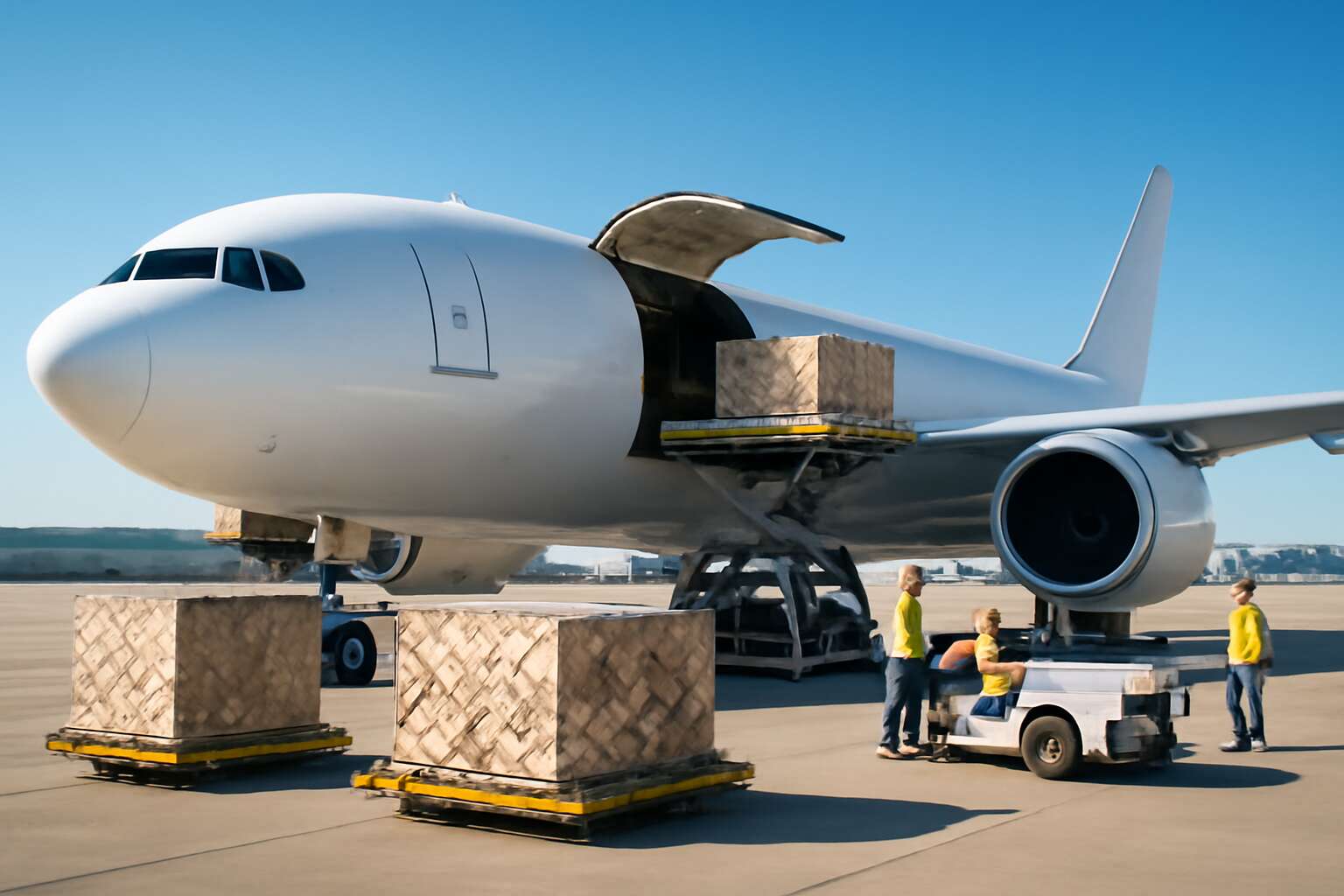
Understanding freight transport by air
What is air freight and how it works
Understanding freight transport by air means moving goods quickly from warehouse to client, a crucial option in South Africa’s fast-paced economy. Globally, air freight accounts for about 1% of freight tonnage but 35% of high-value, time-sensitive goods—an eye-opening reminder of its leverage!
Here are the core steps that define the flow:
- Booking and documentation: air waybills, customs paperwork, and export permits
- Consolidation and handling: packaging, palletization, and secure loading
- Security checks and compliance: screening cargo and adhering to regulations
- Arrival handoff: customs clearance and final distribution to the recipient
From Johannesburg’s O.R. Tambo to Cape Town and Durban, South Africa’s air cargo networks stitch global routes with local flexibility. Electronics, automotive parts and perishables ride the skies on reliable schedules, where weather and capacity influence timelines but momentum remains.
Key advantages of air transport for time-sensitive goods
Time is a currency that never banks its interest. Globally, air freight accounts for about 1% of freight tonnage but 35% of high-value, time-sensitive goods—a striking reminder that speed often trumps sheer capacity. In South Africa, this tension shapes decisions from electronics to perishables moving between major hubs.
Key advantages include:
- Rapid transit across continents, tightening schedules without sacrificing safety.
- Reliability for time-sensitive shipments, reducing stockouts and premium charges.
- Expanded reach from Johannesburg to coastal hubs, enabling just-in-time distribution.
For many SA shippers, freight transport by air is a lifeline when deadlines loom and weather or capacity threaten reliability. The tempo of air networks is as much about trust as velocity!
Differences between air freight, air express, and cargo charter
Freight transport by air accounts for about 1% of freight tonnage yet carries 35% of high-value, time-sensitive goods. It’s a reminder that speed shapes strategy, especially for SA shippers racing to meet deadlines across electronics, perishables, and spare parts.
Understanding freight transport by air means recognizing three options that sit along a speed and control spectrum:
- Air freight (standard): scheduled service on normal routes; cost-effective for mid-sized, time-sensitive loads.
- Air express: premium, door-to-door delivery with guaranteed times and faster customs clearance.
- Cargo charter: entire aircraft rental for oversized or ultra-urgent shipments with flexible routing.
In South Africa, the choice hinges on weight, timing, and network reach: Johannesburg acts as the spine, linking to coastal hubs for just-in-time distribution.
That triad—speed, reliability, reach—defines freight transport by air and shapes how businesses plan inventories when weather or capacity constrains traditional routes.
Common terms and concepts in air cargo
Understanding freight transport by air reveals a pocket of language that keeps shipments moving—from the ramp at OR Tambo to the docks at Cape Town. It’s a world where speed and precision matter, and the term freight transport by air carries weight: turning deadlines into dependable arrivals for electronics, perishables, and spare parts across South Africa.
Common terms and concepts turn opaque processes into clear steps. Here are the essentials you’ll hear most often on the freight desk:
- Air waybill (AWB): the contract and record of carriage.
- Unit Load Device (ULD): a pallet or container for secure handling.
- Transit time: expected time from pickup to delivery, including customs.
- Routing and hubs: the airport network goods pass through to reach destination.
With these concepts in hand, teams across South Africa shape space, custody, and timing, keeping trade routes resilient when storms and capacity bottlenecks press on the network.
Air freight services and solutions
Standard air freight versus expedited options
Speed is the currency of the modern supply chain, and in South Africa that truth cuts straight to the heart of what customers expect. Freight transport by air can transform urgent orders into confident commitments, shaving days off timelines and protecting margins when timing is everything.
Standard air freight delivers reliable, cost-efficient transit on established lanes, with routine handling and consolidated shipments. Expedited options—often branded as air express—offer priority space, faster routing, and guaranteed lead times for time-critical loads.
Within both paths, choosing the right service means weighing speed against cost. Consider these components:
- Priority processing and customs support
- Dedicated lanes or guaranteed service levels
- Real-time tracking and proactive alerts
For South African businesses aiming to stay competitive, aligning air freight solutions with demand patterns turns disruption into opportunity and keeps your supply chain resilient. This is where freight transport by air becomes a strategic pillar for South African commerce.
Consolidated air cargo and less-than-container-load (LCL) airfreight
Freight transport by air remains the swift pulse of modern commerce in South Africa, where Consolidated air cargo and LCL airfreight bend urgency into reliability and grace.
Consolidated air cargo stitches multiple consignments into a single, efficient stream, reducing handling and safeguarding margins on tight timetables. For smaller loads, LCL airfreight converts airport space into a flexible, cost-conscious option that still preserves speed.
- Cost-effective routing through shared space
- Flexibility to scale with demand
- Real-time visibility and proactive alerts
Both routes reward alignment with regional lanes and demand patterns, turning smaller consignments into durable competitive advantages across South African markets.
Elegant logistics travel—fast, precise, and purposeful—through freight transport by air, where opportunity meets resilience in every shipment.
Temperature-controlled and healthcare shipments via air
South Africa’s commerce hums with urgent tempo, and temperature-controlled air shipments keep that rhythm intact. Freight transport by air is more than speed; it’s a disciplined cold chain that preserves potency from Johannesburg’s busy gateways to rural clinics along the coastline. When every degree matters, reliability is the quiet engine behind every vaccine, diagnostic, and perishable shipment.
Temperature-controlled and healthcare shipments via air rely on validated packaging, meticulous routing, and real-time monitoring. Different products demand different envelopes:
- 2-8°C for most vaccines and biologics
- -20°C and -70°C ultra-cold for specialty materials
- Validated insulated shippers and continuous data logging
- Real-time temperature monitoring and proactive alerts
From origin to arrival, SA specialists track the chain, ensuring compliant documentation and custody. This is how clinics stay stocked, labs stay viable, and patients receive care on time, even as seasons shift across the southern seas.
Special handling for dangerous goods and high-value items
Air freight for dangerous goods and high-value cargo demands a blend of nerve and know-how. In the rush between Johannesburg and coastal hubs, freight transport by air becomes a discipline: validated packaging, precise labeling, and crews trained to minimize risk without slowing momentum. A single misstep can ripple through supply chains, so handling is as important as the flight itself.
- IATA-compliant classification, packing instructions, and dangerous goods labeling
- Tamper-evident packaging and secure chain-of-custody for high-value shipments
- Real-time GPS tracking, temperature and vibration monitoring, and proactive alerts
- Dedicated handling teams, secure loading, and audited handoff at every touchpoint
Across South Africa’s cargo gateways—from OR Tambo to Cape Town’s facilities—the network keeps dangerous goods and valuable cargo moving with documented custody and regulatory compliance.
Charter services and routing options
Air moves when timing is everything. In South Africa’s fast-paced logistics arena, freight transport by air keeps critical goods in motion. A recent industry insight suggests time-sensitive shipments reach deadlines up to 70% faster than slower modes, when capacity aligns with precise routing and compliant handling. Our air solutions blend scalable capacity with routing intelligence, delivering predictable transit times, safeguarded by robust security and regulatory compliance.
- Custom charter services for freight transport by air tailored to cargo type, weight, and deadline.
- Direct routing options that minimize touches: point-to-point flights, or curated hubs with secure handoffs.
- Integrated tracking and readiness: real-time visibility, temperature and vibration monitoring, and proactive alerts.
From OR Tambo to Cape Town, our solutions keep cargo moving with flexible charter options and optimized routing, tuned for South Africa’s vibrant economy.
Cost, routing, and efficiency in aviation logistics
Factors influencing air freight rates and surcharges
In freight transport by air, cost is a living metric, not a fixed tag. Base rates ride with volatile fuel prices, currency swings, and security charges; surcharges for peak demand, handling, and documentation add a rising chorus. In South Africa, domestic legs and international hops mingle to shape total landed costs.
Routing is a calculus of time and reliability—these levers shape every leg.
- Hub-and-spoke versus direct services and their impact on transit times
- Slot availability at busy airports and the effect on schedule reliability
- Consolidation strategies that maximize space without delaying departures
Efficiency springs from cohesive planning, transparent handoffs, and data-driven network design; when routes align with demand, capacity moves with intent and timelines tighten.
Route planning, hubs, and interline agreements
In freight transport by air, cost is a living metric—shifting with fuel prices, currency swings, and security charges. Base rates ride the wind; surcharges for peak demand, handling, and documentation rise like a chorus. In South Africa, domestic legs and international hops shape total landed costs.
Routing is a calculus of time and reliability—these levers shape every leg. Hub-and-spoke networks can cut transit times when slots align; direct services reduce touches but may throttle capacity. Consolidation and slot management keep departures timely while maximizing space.
- Route planning that matches demand with capacity
- Hubs designed for efficient handoffs and minimal dwell time
- Interline agreements that streamline transfers and improve visibility
Efficiency springs from cohesive planning, transparent handoffs, and data-driven network design. When routes align with demand, capacity moves with intent and timelines tighten, turning the chaos of air lanes into a dependable rhythm.
Transit times, reliability, and service levels
In a marketplace where every hour costs more than a coffee, freight transport by air becomes a precision instrument. A well-tuned network can shave days from a schedule and keep expectations from spiraling into dramatic theatre.
Costs ride the weather, currency gusts, and security levies. Base rates drift with fuel, while surcharges—peak demand, handling, and documentation—compose the chorus. In South Africa, domestic legs and international hops accumulate to a total landed figure that can surprise even seasoned logisticians.
Routing is a calculus of time and reliability. Hub-and-spoke can shave transit times when slots align; direct services reduce touches but may constrain capacity. Consolidation and slot management keep departures timely, while interline agreements smooth transfers and visibility. When routes meet demand and capacity moves with intent, efficiency follows—air lanes become a dependable rhythm rather than a cacophony.
Documentation, customs clearance, and export/import processes
Costs rise and fall with fuel, currency, and clearance winds. In that tug-of-war, freight transport by air is a surgical instrument: tiny mislabels or missing signatures turn a clean departure into a hold wall. Routing choices—hub chains or direct legs—shape arrival times and day-to-day predictability. Efficiency blooms when paper flows as smoothly as the cargo, turning potential chaos into a reliable rhythm.
- Commercial invoice
- Packing list
- Air waybill (AWB)
- Export declaration
- Certificate of origin
- Licenses and permits (if required)
- Dangerous goods and other handling documents (if applicable)
South Africa’s customs landscape rewards pre-clearance and electronic data interchange. In export/import processes, precise HS codes, origin, and compliant documentation speed clearance, reducing hold times at airports and borders. When these elements align, speed and predictability surge across the supply chain.
Compliance, risk management, and sustainability in air transport
Regulatory requirements, certifications, and audits
Freight transport by air demands precision and conscience; one misstep can ripple through a multibillion‑rand network. Compliance isn’t a checkbox—it’s a living discipline. Risk management begins with clear governance, robust screening, and traceable custody from pickup to handoff. In South Africa, SACAA and global bodies set the rules, and audits seal performance!
Key elements include regulatory requirements, certifications, and audits.
- Regulators: SACAA, ICAO, IATA
- Certifications: IOSA, ISO 14001, ISO 9001
- Audits: internal, supplier, third‑party
Sustainability isn’t mere expense; it’s strategy. Modern fleets, SAF trials, and transparent emissions reporting converge safety with stewardship. In South Africa, greener ground handling and smarter routing turn freight transport by air into a responsible, future‑proof choice.
Security measures, insurance, and compliance risk
Freight transport by air operates on precision and trust; one slip can ripple through a multibillion-rand network, with disruptions costing as much as 2% of turnover. That reality shapes how we approach compliance, security, and risk management: governance that is clear, screening that is robust, and custody that is traceable from pickup to handoff. In practice, this means rigorous checks, transparent documentation, and a culture that treats safety as a living discipline rather than a box to tick.
- Secure chain-of-custody and tamper-evident packaging to deter theft and misrouting.
- Insurance readiness with defined liability and claims processes that align with cargo risk.
- Ongoing compliance risk oversight—internal audits, supplier checks, and incident-learning loops.
In parallel, sustainability isn’t an afterthought; it threads through flight planning, fuel choices, and emissions reporting. Trials with sustainable aviation fuel (SAF) and greener ground handling in South Africa prove that safety and stewardship can travel together, turning air freight into a responsible, future-forward option.
Environmental impact, emissions, and sustainability strategies
In freight transport by air, precision equals continuity, and we know that disruptions can cost up to 2% of turnover in South Africa’s networks. Compliance and risk governance aren’t boxes to tick—they are guardrails that keep cargo moving and people safe.
Environmental impact shapes every choice, from flight planning to propulsion options. Emissions reporting and cleaner fuels show we can trim our footprint without sacrificing speed.
- Emissions accounting and transparent reporting
- SAF adoption and greener handling
- Sustainability metrics across hubs
In SA, these practices prove that freight transport by air can be responsible and future-ready.
Emerging trends: SAF, digitalization, and future of air cargo
In freight transport by air, disruptions can cost up to 2% of turnover in SA networks, which is why compliance and risk governance aren’t boxes to tick—they’re guardrails that keep cargo moving and people safe!
Emerging trends are reshaping how safety, efficiency, and responsibility are pursued.
- SAF adoption and greener handling across hubs
- Digitalization and real-time risk analytics
- The future of air cargo: agile networks and modular processes
Across South Africa, these shifts translate into clearer emissions reporting, smarter fuel choices, and comparable sustainability metrics across hubs. It’s about safer skies, predictable costs, and public trust.

0 Comments