
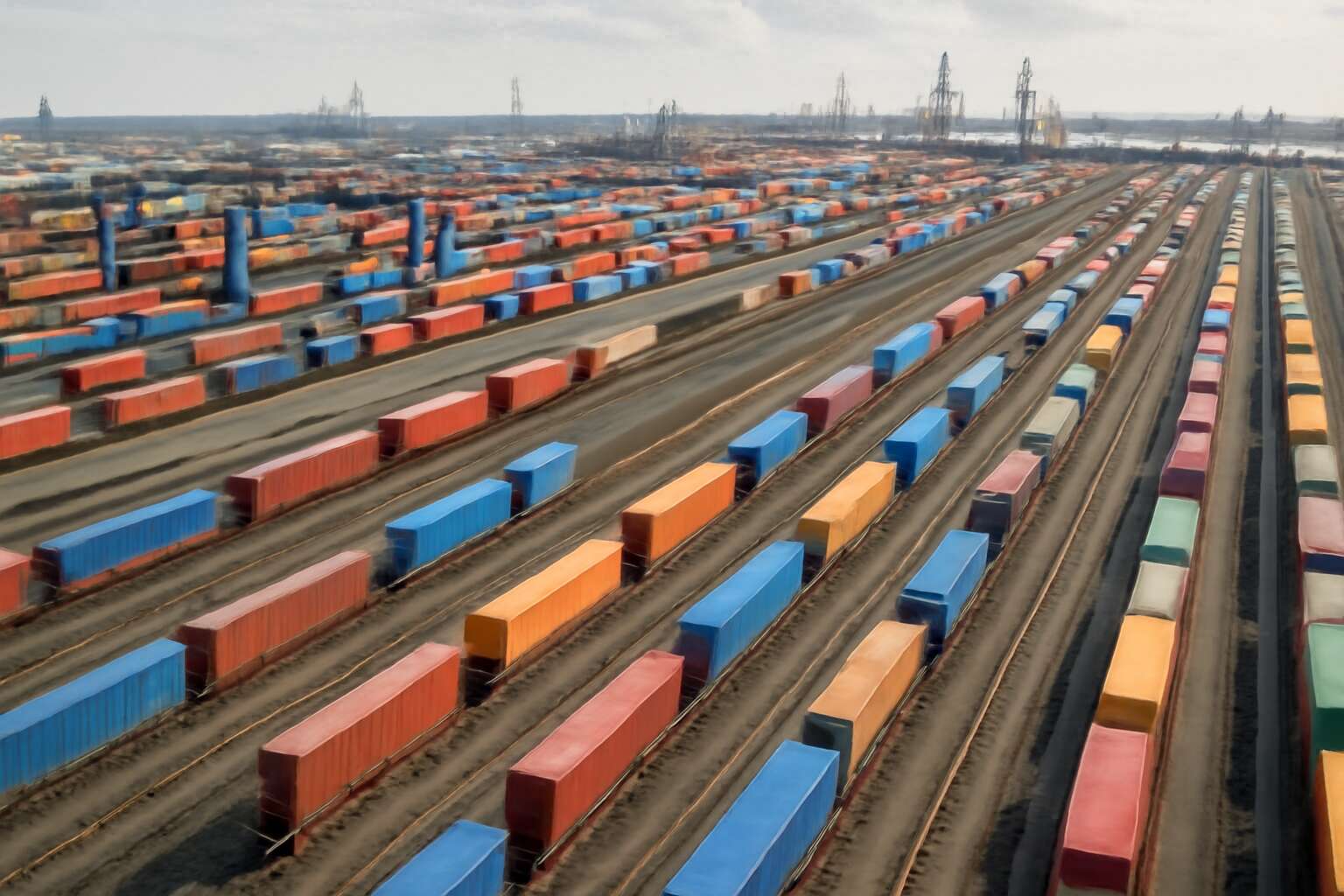
Rail freight industry overview
Global rail freight landscape
In the rail freight transport world, reliability is the new speed, and corridors stretch like steel arteries feeding global supply chains! A well-timed move can shift volumes across continents with lower fuel burn and quieter wheels, a quiet revolution that outpaces many expectations.
Across regions, the landscape favors intermodal hubs, optimized timetables and smarter yards. In South Africa, inland corridors connect mining belts to ports, while pan-African links push cross-border freight toward more predictable schedules and shorter turnarounds.
- Intermodal efficiency expands networks and capacity
- Digital scheduling, telemetry and data sharing
- Sustainability aims for decarbonization and cleaner operations
These shifts stitch the global rail network into a more resilient chain, linking mines, factories and ports with logistics precision.
Key players and regional dynamics
In the rail freight transport world, punctual timetables are a currency more potent than speed—an on-time departure can redraw trade routes overnight.
Across Africa and beyond, the market centers on strong regional players and cross-border corridors. In South Africa, Transnet Freight Rail anchors mine-to-port freight, while inland corridors to Zimbabwe, Botswana and Mozambique extend the reach. Globally, an ecosystem of integrated carriers and intermodal operators—DB Cargo, SNCF Logistics, DHL Global Forwarding, and Kuehne+Nagel—keeps networks moving around the clock.
- Transnet Freight Rail (South Africa) and regional operators
- Private intermodal players expanding inland hubs
- Global logistics groups providing rail services
Smart scheduling, smarter yards and decarbonized traction quietly expand capacity and reliability, linking mines, factories and ports with steady precision.
Technology, operations and efficiency
In the rail freight transport world, darkness is a partner, guiding efficiency with quiet certainty. A whispered statistic says up to 40% of delays begin in yards.
Technology and operations hinge on smart scheduling, predictive maintenance, and decarbonized traction. Digital twins, real-time telemetry and automated yard systems trim waste and sharpen reliability. In South Africa, inland corridors to Zimbabwe, Botswana and Mozambique reflect this shift.
Across corridors in South Africa and beyond, discipline and data form a lattice.
- Real-time visibility
- Predictive maintenance
- Decarbonized traction
Night yields to dawn as each movement writes the steady heartbeat of industry. I hear the timetable sing as dawn arrives.
Sustainability, policy and future outlook
Across South Africa’s steel-blue corridors, the rail freight transport world moves with dependable patience. Rail emits up to 76% less CO2 than road per tonne-kilometre, a figure that whispers louder when time and cost are on the line. That efficiency is the quiet engine of regional growth!
Policy in South Africa is steering rail toward electrification, modal shift, and investment in yards and upgrades. The aim: safer, cleaner, faster corridors that lure freight from highways to rails.
- Decarbonisation targets aligned with national grid plans
- Infrastructure modernization and yard automation
- Open data, interoperability, and streamlined regulation
In the broader outlook, three forces shape the route forward: policy clarity, private capital, and digital resilience—quiet, inevitable, and precise.
In the global rail freight transport world, Africa’s corridors are being rewired for a leaner, smarter, more resilient future.



0 Comments