
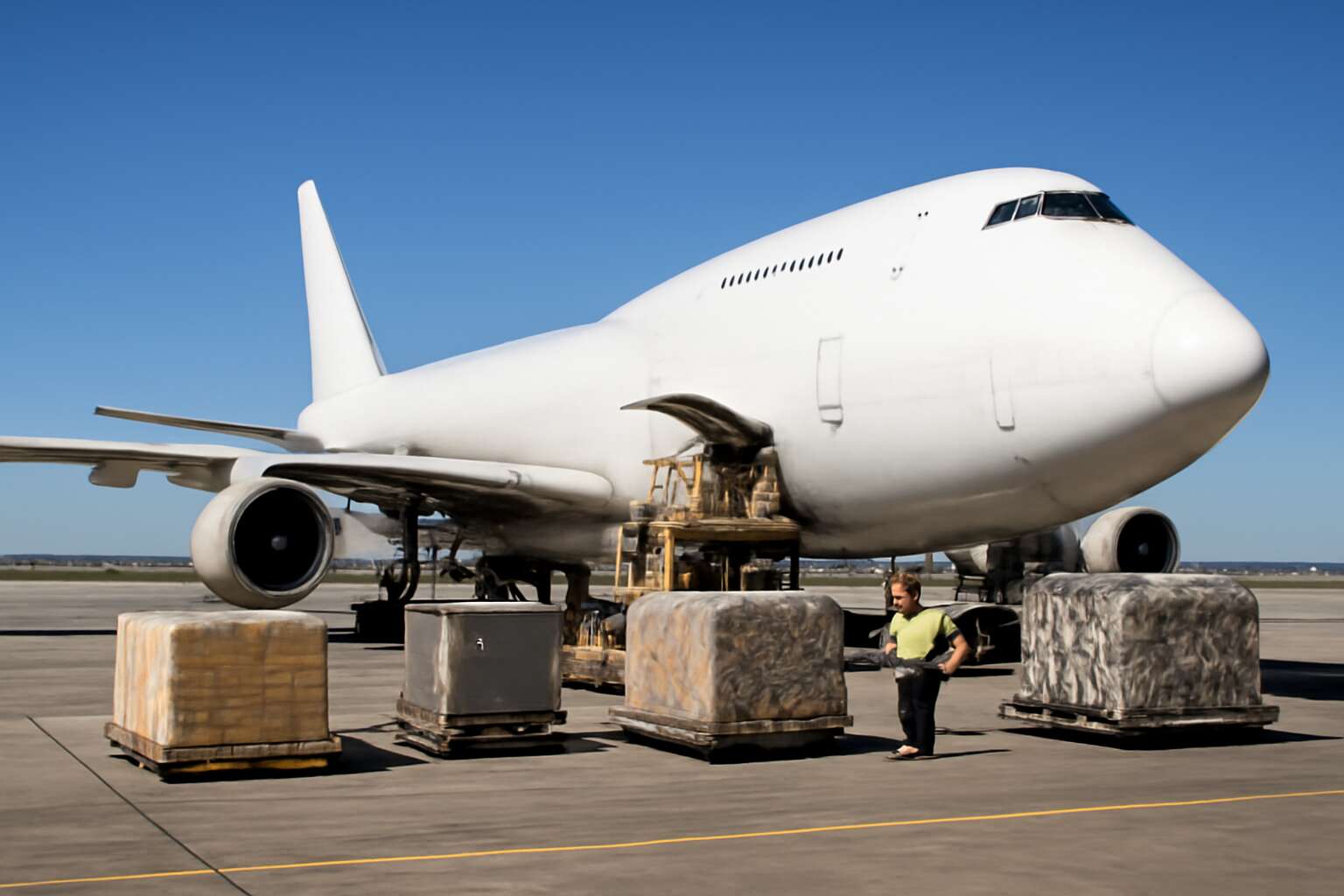
Air Freight Essentials: Understanding Global Air Cargo
Definition and scope of air freight
Air freight transport is the heartbeat of fast-moving markets, where a single shipment can vault a product from Durban to Dubai in hours rather than days. It defines the modern supply chain: fast, secure, and globally interconnected. In South Africa, this network binds local manufacturers to distant consumers and rare markets.
Its scope spans time-sensitive goods and strategic objectives.
- Perishables: seafood, fruit, vaccines—kept under strict temperature controls.
- High-value or fragile items: electronics, jewelry, machinery requiring careful handling.
- Emergency or disaster-relief shipments: rapid deployment to affected regions.
In South Africa, the infrastructure—airports, customs, and cold-chain capabilities—forms the backbone that keeps these shipping routes alive, allowing businesses to move goods with grace against the tyranny of delay. For shippers, air freight transport continues to shape global logistics.
Key differences between air freight and sea/road transport
Air freight transport stands as the electric current in a global grid of goods, where a cargo plane can shave days off a delivery clock and turn delays into lost customers. In practice, it sits at the crossroads of speed and precision, a service metric that sea cargo or road haulage struggle to match. The differences aren’t simply about distance; they’re about timing, handling, and risk management—elements that reshape every supply chain decision.
Key differentiators include:
- Transit speed and schedule certainty
- Cost and capacity trade-offs
- Special handling for perishable or high-value items
For South African shippers, understanding these nuances helps navigate customs, temperature control, and hub networks, aligning air freight transport with strategic priorities.
Who uses air freight and common use cases
Air freight transport moves at the pace your business requires. Shaving 3–5 days off critical shipments can mean the difference between a full order book and missed revenue. It blends speed with precision, offering temperature control, security, and reliable schedules—benefits that time-bound markets rely on more than distance alone!
- Pharma and healthcare products needing temperature control
- Electronics and high-value components for just-in-time assembly
- Fashion and fast-moving consumer goods for peak seasons
- Critical spare parts for manufacturing and mining operations
Across South Africa, industries lean on air freight transport to clear customs quickly, maintain product integrity, and connect with global hubs. Whether it’s perishable produce, high-value electronics, or urgent spare parts, a well-tuned air freight network keeps supply chains resilient and responsive.
Typical timelines and service levels in air cargo
“Speed is the currency of modern logistics,” a veteran freight planner likes to say. air freight transport moves by hours, not miles; a handful of days can bridge continents while keeping margins intact. From the moment a pallet departs to the moment it lands, time becomes the ledger by which reliability is measured.
Typical timelines depend on route, weight, and service level, yet a few patterns hold. These service levels help teams align risk and promises:
- Time-definite delivery: a guaranteed window for arrival, with penalties for delays.
- Next-flight-out and express options: the swiftest routing for critical shipments.
- Temperature-controlled handling: essential for pharma, biologics, and perishables.
Across South Africa, air freight networks stitch Johannesburg, Cape Town, and Durban to global hubs, accelerating customs clearance and product integrity. In this cadence, the supply chain stays resilient and responsive, turning tight deadlines into trusted performance.
Global Network and Route Optimization
Major air cargo hubs and their roles
Global air freight transport hums with a quiet ferocity, a nocturnal web stitching continents in the blink of a wing. A striking fact persists: air freight accounts for about 35% of world trade by value, while representing only around 1% of tonne-kilometres. In this global map, major hubs pulse as beating hearts, orchestrating arrivals, departures, and the delicate ballet of handoffs.
These hubs aren’t mere stopovers; they are roles in a carefully tuned system:
- Dubai International (DXB) — the southern gateway, linking Africa and Asia with relentless freighter flow.
- Frankfurt (FRA) — Europe’s spine for cross‑continental transfers and swift clearance.
- Singapore (SIN) — Asia‑Pacific hub, fast throughput and digitized handoffs.
- Hong Kong (HKG) — dense feeder network to China and regional markets.
Route optimization turns this map into a living organism, recombining schedules, aircraft types, and slots to minimize delay. From Johannesburg, shipments ride through DXB or FRA, then fan outward, illustrating how even a single route can sculpt weeks of supply into punctual moments. This is the art of air freight transport.
Route optimization strategies for faster delivery
Global skies hum with a quiet, relentless logic: air freight transport moves roughly 35% of world trade by value, yet accounts for only about 1% of tonne-kilometres. Routes are living maps, forever recalibrating to move value from origin to end user with surgical precision. The global network stitches continents together through timing, digitized handoffs, and shared ground-handling lanes, turning complexity into a timed choreography across time zones.
- Dynamic, multi-leg routing balances capacity with demand across hubs.
- Predictive planning uses real-time weather, congestion, and cargo data.
- Closer slot coordination and cross-docking minimize dwell time at key nodes.
From South Africa’s ports and inland corridors, this choreography keeps momentum even as markets swing. Tight route optimization translates into faster deliveries and sharper reliability, a quiet edge in the air logistics landscape.
Seasonality and capacity trends
Global skies operate like a finely tuned orchestra, and air freight transport is the percussion section—steady, punctual, and occasionally louder than expected. In the global network, seasonality can tilt capacity from one week to the next, turning a routine itinerary into a high-stakes scheduling dance.
From South Africa’s ports and inland corridors, the choreography remains nimble, with capacity flux guiding route choices across time zones.
- Holiday demand spikes tighten slots at peak gateways
- Weather and congestion ripple through corridors, reshaping schedules
- Freight forwarders optimize by aligning inland connections with major hubs
These dynamics translate into faster handoffs and more reliable delivery windows when capitalizing on the right seasons and capacity windows in global networks.
Costs, Pricing, and Value in Air Cargo
Understanding air freight rate structures
In a sector where every extra hour can tilt a deal, air freight transport prices still demand attention—global rates rose approximately 5% last year, underscoring the premium on speed! Pricing hinges on more than weight; it’s a map of factors, from fuel to handling to the destination’s terminal charges.
- Base freight rate (charged per kilogram or per shipment)
- Fuel surcharge tied to oil prices
- Security, handling, and documentation fees
- Dimensional weight adjustments and peak-season surcharges
Value in this arena comes from predictability and speed. A transparent rate structure reveals where savings truly live—short transit times justify premium lanes, while consolidation approaches can lower per-kilogram costs without sacrificing reliability. The smartest shippers treat quotes as a narrative, comparing not just the bottom line but the service level, risk mitigation, and end-to-end visibility embedded in each option.
Cargo insurance and risk management
In the high-altitude theatre of air freight transport, speed wears a cost and cost wears a shield. Cargo insurance is the quiet engine that guards forecasts against the sudden squall of loss or damage. When the journey is insured, even unforeseen hiccups lose their sting, and cash flow sails steady through turbulence.
Pricing stretches beyond the premium to include declared value, deductibles, and policy extensions. Robust risk management turns uncertainty into a navigable map, crucial on South Africa’s cross-border corridors where weather, paperwork, and port delays stride in step. Consider these essentials:
- Coverage scope: all-risk vs named-perils
- Declared value alignment with valuation rules
- Transit options: warehouse-to-warehouse and local handling
- Claims process clarity and required documentation
Cost drivers: weight, volume, and dimensional charges
In air freight transport, costs hinge on more than scale. The main dial-turners are weight, volume, and dimensional charges—the triad that translates size into price. Carriers compare actual weight with dimensional weight (L x W x H divided by a standard factor, commonly 6000). The higher figure becomes chargeable weight, guiding both the quote and the space allocated in the cabin or hold.
Beyond that math, declared value and packaging choices shape value and risk. A compact, high-value shipment can command a higher per‑kilogram rate, while bulky items ride on volume-based calculations. Thoughtful packaging that minimizes unused space and careful labeling can unlock savings, keeping freight transport efficient and predictable even on tight schedules.
Hidden fees and surcharges explained
In air freight transport, pricing wears many masks across South Africa’s bustling supply chains. Beyond the base rate, carriers layer surcharges tied to peak demand, volatile fuel costs, and the risk carried in every shipment. Hidden fees arrive with little ceremony, sharpening the final invoice!
Common surcharges to anticipate include:
- Fuel surcharge linked to route length and fuel prices
- Security and handling fees at airports or hubs
- Terminal charges and documentation fees
- Peak-season surcharges and currency adjustments
Smart packaging reduces wasted space and an accurate declared value shapes insurance and risk costs. In the tapestry of South Africa’s trade routes, these choices illuminate value, balancing margins for shippers from Cape Town to Johannesburg.
Strategies to balance cost and speed
Speed is profit in air freight transport, and margins hinge on timing. Cheap lanes save money, but they can stretch timelines; premium options slice days at a premium. The balance? Align service level, risk tolerance, and product urgency so value outpaces cost—almost supernatural in its precision.
Consider these factors to preserve value without breaking the bank:
- Service tier alignment with risk tolerance
- Scheduling flexibility to minimize premium surcharges
- Packaging efficiency and accurate declared value
In this landscape, the art is forecasting demand and marrying price certainty with performance. A well-choreographed mix of reliable partners, flexible timing, and protective packaging turns speed into steady value.
Compliance, Security, and Risk Management
Customs clearance and documentation requirements
In air freight transport, up to 40% of delays trace back to documentation mistakes, a statistic that makes compliance a competitive edge. Here, the choreography of security, risk management and customs clearance becomes a shield against bottlenecks. From Johannesburg to Cape Town, the right paperwork and data integrity guide goods through SARS and border controls with confidence, not hesitation. Clear, accurate declarations reduce risk and help maintain service levels across the country.
- Commercial invoice and packing list
- Air waybill
- Certificate of origin
- Import/export licenses and permits when required
Beyond forms, robust risk management means secure packaging, tamper-evident seals, and trusted handoffs. Clear responsibilities, proper routing, and real-time status updates help mitigate theft and loss. In South Africa, focusing on up-to-date customs clearance and documentation requirements keeps the flow steady and predictable.
Security screening and safe handling of goods
Nearly a quarter of disruptions in air freight transport hinge on screening and data handling. In this realm of velocity and vigilance, a robust compliance culture converts potential bottlenecks into smooth ascent, because a single misfiled form can ripple through a flight schedule. Security screening and safe handling are the invisible choreography that keeps goods moving with confidence through bustling hubs and busy skies.
Beyond forms, a guardrail of risk management protects cargo at every stage.
- Secure packaging
- Tamper-evident seals
- Trusted handoffs
Real-time status updates, clearly defined responsibilities, and prudent routing stitch together a transparent journey, keeping clients confident and partners aligned.
Liability, insurance, and claims processes
Within the realm of air freight transport, a rigorous compliance culture is a shield and a compass! In South Africa, firms align with customs, data protection, and security protocols, turning potential delays into predictable rhythms, and the aim is to convert risk into confidence as goods traverse busy gateways.
Liability and insurance sit at the heart of the journey. Transparent coverage, clearly defined responsibility, and swift claims processes guard value from departure to delivery, giving clients and partners reassurance even when disruption looms.
- Pre-claim documentation and policy verification
- Incident reporting and evidence capture
- Damage or loss assessment and notification timelines
- Claim submission, review, and settlement standards
In practice, these guardrails keep the story of every shipment coherent, from origin to final mile, empowering stakeholders to plan with assurance in air freight transport.

0 Comments