
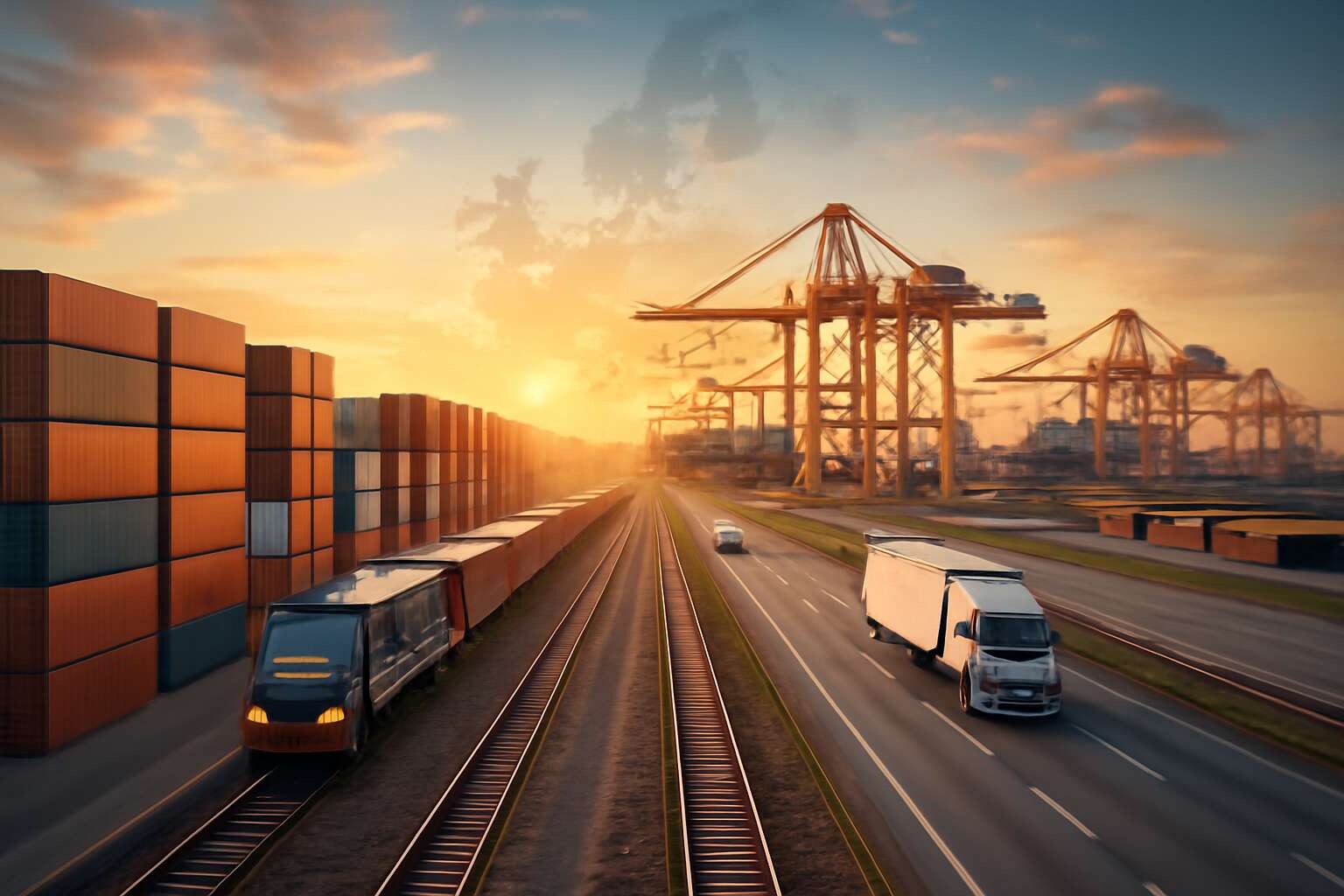
Overview of freight transport in the European Union
Definition and scope of freight transport in the EU
A fresh, bustling artery runs through Europe, and it isn’t a highway but a living network! A leading study notes the EU’s freight network is among the most integrated in the world. In the EU, freight transport eu moves goods across road, rail, sea, and air, stitching markets and shaping delivery timing with quiet inevitability.
Definition and scope are more than buzzwords; they frame policy, infrastructure, and cross-border rules governing every tonne of cargo within the freight transport eu framework. Movements span intra-EU trade and links with nearby regions, depending on reliable corridors, clear customs, and smart logistics planning.
- Road freight
- Rail freight
- Maritime freight
- Air freight
For readers in South Africa, the EU’s approach creates one consistent frame when eyeing European partners and distribution hubs. This awareness helps map timelines, select capable carriers, and anticipate bottlenecks within a shared, global supply chain.
Key trends shaping EU freight transport
Across Europe, logistics moves with a quiet, relentless tempo—like a city breathing. The freight transport eu framework is evolving beyond roads and rails, threading policy, infrastructure, and cross-border rules into a single living system. Within this ecosystem, carriers adapt to new data streams, sustainable mandates, and tighter timetables, shaping how goods meet markets and how quickly they arrive. For South African partners eyeing European corridors, this frame offers a steady compass in an otherwise bustling landscape.
Here are the rhythms redefining the sector.
- Digitalization and data sharing that shrink delays and unlock visibility
- Decarbonization driving cleaner fleets and new fuels
- Multimodal hubs stitching road, rail, sea, and air into smoother handoffs
- Cross-border rule alignment reducing red tape and expediting shipments
For South African readers, these shifts translate into clearer timelines, reliable partners, and a more resilient, globally connected supply chain.
Economic impact and trade implications for EU member states
Across the EU, freight transport eu moves hundreds of billions of tonne-kilometres of goods each year, stitching markets from the Iberian Peninsula to the Baltic. This vast network underpins production, jobs, and regional growth, shaping how firms price risk and plan inventories.
For EU member states, efficient logistics translate into steadier GDP, resilient supply chains, and stronger regional cohesion. Trade routes through ports, rail nodes, and multimodal hubs determine export competitiveness, supplier diversity, and the cost base of manufacturers and retailers. That’s why investment in corridors and data-enabled planning matters!
- Lower logistics costs and faster transit times boost market access
- More predictable schedules support just-in-time production
- Greener fleets and fuels reduce emissions and future-proof budgets
For South Africa, EU freight systems offer clearer timelines and smoother cross-border flows when you export to Europe or source from EU suppliers. The freight transport eu framework nudges prices and risk, boosting resilience.
Major freight corridors and hubs in Europe
Across the European Union, freight transport eu channels hundreds of billions of tonne-kilometres of goods each year, threading markets from the Iberian Peninsula to the Baltic. Major corridors knit rail, road, and sea into a single, reliable chain. The framework nudges prices and risk, helping South African exporters and EU partners synchronize schedules and capacity.
From the Rhine–Alpine corridor threading Basel to the northern ports, to North Sea and Mediterranean routes stitching the peninsula and Iberia, interoperable rail gauges, inland waterways, and deep-sea terminals move goods efficiently. The key hubs pulse with activity as the world turns; these gateways enable just-in-time deliveries and regional cohesion across the Union.
- Rotterdam (NL) — Europe’s largest port and multimodal gateway
- Antwerp (BE) and Hamburg (DE) — robust Rhine corridor nodes
- Valencia (ES) and Genoa (IT) — southern Mediterranean hubs linking inland networks
Regulatory framework and standards for EU freight transport
EU transport regulations and compliance requirements
In the freight transport eu landscape, a labyrinth of rules governs every link in the chain. More than a third of cross-border delays trace back to paperwork and compliance bottlenecks, making the right framework a fast lane for goods and margins. The aim is harmonisation that keeps corridors open while safeguarding safety and the environment.
Regulatory framework translates into day-to-day obligations:
- Driver hours and rest requirements
- Hazardous goods classification and packaging (ADR)
- Vehicle safety and emissions standards
- Digital transport documents (e-CMR) and data sharing
- Cross-border licensing and permits
- Conformity assessment and CE marking for goods
For South African shippers, EU access hinges on customs procedures, VAT, and third-country operator obligations. CE marking and safety compliance shape market access, and interoperable digital documents help you move efficiently within the freight transport eu landscape.
As rules evolve, the regulatory framework remains the compass for corridor operations—lighting the path through shifting landscape!
Vehicle and load safety standards in the EU
Safety rules along EU freight corridors are not gatekeepers but guiding stars: a well-tuned fleet glides, and delays fade like mist at dawn. Vehicle and load safety standards act as the axle and lamp, keeping every turn true and every cargo cradle secure. In this well-lit theatre of regulation, compliance is momentum, not a mere checkbox.
Key standards shaping the road include these pillars:
- Unified vehicle type-approval and UNECE-aligned safety regulations drive a single standard across borders.
- Emissions discipline under Euro VI keeps air clean while power remains reliable.
- Load securing requirements EN 12195 and EN 12642 ensure cargo stays put through every bump and bend.
- Digital and physical inspections align with cross-border checks, supporting e-CMR and harmonised documentation.
For South African shippers, the freight transport eu landscape translates into safer, more predictable journeys—bridging continents with confidence when the standards are met.
Cross-border movement and customs procedures
Regulatory framework and standards for cross-border movement set the stage for predictable journeys. In the EU, rules are not roadblocks but signposts, guiding shipments through customs regimes, transit procedures, and harmonised inspections. From my years working with South African clients, these structures feel like steady hands on the wheel, turning complexity into clarity.
Across Europe, the path is supported by a few core mechanisms that keep freight moving smoothly:
- Harmonised customs documentation and single-window approvals
- Digital declarations and e-CMR-enabled checks that speed border flows
- Transit schemes and authorised consignor regimes that accelerate clearance
For South African shippers, clarity in rules translates into steadier schedules and safer cargo. The freight transport eu framework underpins that confidence, turning complex borders into familiar roads.
Tolling, emissions, and environmental criteria in EU freight
From the first mile to the last, the freight transport eu thrives on clarity. “Clean corridors create confident schedules,” a European logistics executive once told me, and the sentiment sticks as routes unfold with purpose. The regulatory framework and standards governing EU freight set the tempo, turning potential bottlenecks into predictable progress. For South African shippers, this lattice of rules translates into steadier plans and safer cargo as markets align behind a common rhythm.
Within this framework, tolling schemes, emissions limits, and environmental criteria guide every mile. The aim is transparent, efficient movement across borders, supported by harmonised road pricing and performance-aware fleets.
- Tolling transparency and cross-border road pricing harmonisation
- Emissions targets aligned with Euro standards for trucks
- Low-emission zones and incentives for cleaner fleets
All told, the freight transport eu rules convert complexity into confident navigation, a boon for SA operators navigating European markets.
Modes of freight transport and their roles in Europe
Road freight and its dominance in EU supply chains
Across Europe, freight moves with the rhythm of a living system, and road freight carries the loudest note. Estimates suggest 70–75% of inland freight tonne-kilometres are moved by trucks, underscoring how road networks power EU supply chains and keep shelves stocked. This is the essence of freight transport eu.
Beyond roads, other modes fulfill complementary roles in Europe’s web of corridors:
- Rail: high-volume, long-haul shifts with lower emissions
- Maritime: bulk goods linking ports across borders
- Air: urgency for time-sensitive shipments
- Inland waterways and multimodal hubs: seamless transfers
For readers in South Africa eyeing EU trade, these modes shape route planning and cost efficiency. Freight transport eu becomes a living framework, where road remains dominant but harmonious multimodality strengthens resilience and responsiveness to shifting markets.
Rail freight as a sustainable alternative
In the freight transport eu landscape, rail freight quietly shoulders the heavy lifting of Europe’s corridors. For bulk goods and long-haul moves, trains offer speed, scale, and a cleaner footprint that road alone cannot match!
- High-volume capacity that trims handling and congestion
- Long-haul efficiency across cross-border corridors
- Lower emissions per tonne-km than trucks
- Intermodal readiness at key hubs
Rail freight advantages translate into resilience and predictable costs, a lifeline for Europe’s integrated supply chains and for South African buyers eyeing EU routes.
Inland waterways and maritime freight and port infrastructure
Ships carve quiet arcs along Europe’s coastlines, turning salt air into supply chains. I’ve stood on a quay and watched a vessel move the load of hundreds of trucks, its rhythm—almost supernatural in its efficiency—outpace land routes when bottlenecks flare.
Inland waterways and maritime freight anchor Europe’s global logistics web. As part of the freight transport eu, rivers and seas offer lower emissions per tonne and reliable schedules, especially when backed by robust port infrastructure that keeps cargo flowing from hinterland yards to international markets.
Port infrastructure is the heartbeat of this mode, bridging water with land and enabling seamless transfers to final destinations.
- Strategic hub ports with deep-water access
- Efficient intermodal terminals and rail links
- Smart dredging, pilotage, and hinterland connectivity
South African companies eyeing EU routes see how such networks unlock cost-competitive scaling and resilience, turning coastal corridors into reliable lifelines for cross-continental trade.
Air freight logistics for time-sensitive goods
Four voices carry Europe’s commerce: air for the instant, rail for the length, road for the nimble detour, and water for the bulk that hums along. In the EU’s orchestration of trade, speed meets reliability, and distance dissolves into promise. Freight moves with a steady pulse—the freight transport eu—where hubs and intermodal care keep goods alive in transit.
To see the balance, consider how each mode lends a distinct tempo:
- Air freight: time-sensitive goods, fast transit, and careful handling that preserves temperature-sensitive cargo.
- Rail and inland waterways: efficient, high-volume backbone with steady schedules and lower emissions.
- Road: last-mile flexibility, urban access, and adaptable routing for complex distribution.
South Africa’s shippers eye EU corridors, imagining a map of resilience where air lanes meet the steady cadence of rail, road, and water. It’s a dialogue across ports and hinterland yards, turning distance into shared opportunity.
Intermodal and multimodal transport solutions
Across Europe, a quiet orchestra moves cargo with a patient tempo—the freight transport eu shaping trade lanes, hubs, and hinterlands. Air freight offers instant access for perishables and time-critical shipments, while rail and inland waterways provide a backbone of efficiency and lower emissions. Road keeps the last mile alive, adapting to urban grids and tight delivery windows. The rhythm aligns cities with distant markets.
- Air freight: speed, precision, and controlled environments.
- Rail and inland waterways: high-volume backbone with schedule reliability.
- Road: agile routing and last-mile flexibility.
Intermodal and multimodal solutions weave these modes into resilient corridors, turning distance into dependable routes that South Africa’s shippers hope to ride. The goal is not speed alone, but the freight transport eu ethic of reliability, responsibility, and sustainability.
Sustainability, decarbonisation, and future trends in EU freight
EU Green Deal and decarbonisation targets for freight
Europe’s freight arteries are being rewired, and the stakes are high: a cleaner, faster, more resilient system is the goal. The EU Green Deal targets substantial decarbonisation of freight by mid-century, reshaping how goods move across borders and oceans. For readers in South Africa, the evolution of freight transport eu signals both compliance horizons and opportunity windows in global trade.
Consider these core shifts driving the trajectory:
- Electrification and the use of green fuels for trucks, ships, and trains, paired with charging and refueling infrastructure.
- Modal shift toward rail and inland waterways to reduce road congestion and emissions.
- Digitalisation, intermodality, and real-time data to optimise routes, loads, and energy use.
Future trends will hinge on policy certainty, price signals for carbon, and smarter ports that integrate with rail and waterways. For South African businesses, aligning to EU standards today can smooth future cross-border shipments and attract green finance.
Alternative fuels and clean propulsion options
By 2030, transport emissions in the EU are slated to fall 55% under the Green Deal, a sharp target that retools every shipment. The freight transport eu is being reshaped into a cleaner, faster, more resilient network. For South Africa, that evolution signals compliance horizons and new trade opportunities.
Sustainability isn’t optional; it’s the design brief. The options grow beyond diesel, with clean propulsion options and alternative fuels expanding the toolkit across trucks, ships, and trains.
- Battery electric propulsion for urban and short-haul routes
- Hydrogen fuel cells for heavy long-haul legs
- Ammonia and sustainable biofuels for ships
Future trends hinge on policy certainty, carbon pricing signals, and smarter ports that knit rail, waterways, and road into seamless intermodality. The shift creates opportunity windows for South African partners, aligning to EU standards today to smooth future cross-border shipments and access green finance. Freight transport eu is moving toward integrated, greener corridors.
Digitalisation, data sharing, and smart logistics
Two winds blow through Europe’s corridors of steel and smoke: the stubborn heft of diesel and the electric murmur of policy. By 2030, the EU aims to cut transport emissions by 55%—a siren call that compels every shipment to walk in daylight. In this freight transport eu, sustainability is not ornament but spine, keeping corridors alive and resilient.
Digitalisation, data sharing, and smart logistics are not buzzwords—they are weather systems guiding every seam of the network. I watch interoperable data flows stitch rail, road, and port into one breath: real-time visibility, digital freight documents, and sensors that anticipate trouble become routine. Decarbonisation follows when clarity leads.
Three pillars shape the future:
- Interoperable data standards across operators and borders
- Real-time visibility and predictive routing
- Smart sensors, condition monitoring, and data-driven maintenance
For South Africa, this signals alignment with EU norms and an opening to ride the greener wave of cross-border shipments in freight transport eu, with green finance to match the pace.
Future-ready infrastructure and investment priorities in the EU
By 2030 the EU targets a 55% cut in transport emissions, turning every shipment into a daylight-lit journey rather than a shadowed detour. Sustainability is the spine that keeps Europe’s freight corridors alive, resilient through weather and price swings alike. Decarbonisation isn’t a trend; it’s a compass guiding investment toward greener fuels, cleaner ports, and smarter planning across borders.
As the freight transport eu blueprint unfolds, Europe prioritises future-ready infrastructure and sustainable funding. For South Africa, this signals alignment with EU norms and an opening to greener cross-border shipments, backed by green finance to pace the transition.
- Upgrade TEN-T corridors and cross-border terminals to unlock resilient intermodal capacity.
- Modernise ports and inland waterways to boost efficiency and modal shift with lower emissions.
- Mobilise green finance and public-private partnerships to accelerate clean propulsion, energy efficiency, and large-scale planning.
Cross-border challenges, customs, and logistics optimization in the EU
Harmonising standards across member states
Cross-border challenges in the EU are not just a paperwork trap; they are a living tempo that sets the pace of trade. Customs queues, divergent product classifications, and varying inspection regimes can turn a routine delivery into an odyssey. In freight transport eu, harmonising standards across member states reshapes that tempo, turning friction into flow and uncertainty into predictability!
- Digital, harmonised documentation that travels with the goods
- Unified inspection slots and risk-based checks
- Single-window customs processes across borders
These alignments unlock logistics optimization by reducing dwell times, enabling just-in-time planning, and freeing capacity for green modes. When borders share a common tempo, operators can anticipate delays, optimise loads, and keep supply chains responsive to demand shifts.
Customs procedures and trade facilitation in the EU
Across the EU, roughly a third of cross-border shipments encounter delays at border controls, a reality that reshapes the tempo of trade. Cross-border challenges aren’t mere paperwork traps; they can turn a routine delivery into a buffering exercise. For South African exporters aiming at European markets, those delays hit inventory turns and margins.
To illustrate practical progress, these core elements drive faster clearance and predictable sailing times for freight transport eu.
- Digital, harmonised documentation that travels with goods
- Unified inspection slots and risk-based checks
- Single-window customs processes across borders
Where these elements align, dwell times shrink and just-in-time planning becomes the norm. For Europe-facing supply chains, that clarity lets operators rebalance loads, meet demand shifts, and keep trade flowing smoothly.
Border control and transit times for freight corridors
Across the EU’s maze of borders, one stat cuts through the noise: up to a third of cross-border shipments slow at controls, changing the rhythm of trade. For South African exporters chasing European demand, that tempo is everything.
Cross-border challenges aren’t just paperwork—they reshape inventory, security buffers, and delivery windows. In the world of freight transport eu, dwell times can tilt margins and strain cash flow, especially when customs data gaps and fragmented procedures block the most efficient routes.
- Digital workflows that attach to goods as they move, not to scattered offices
- Coordinated inspection planning that lines up lanes and time slots
- A single access point for border analytics and clearance
When these elements align, transit times become predictable and loads can be rebalanced to meet shifting demand, keeping trade flowing along Europe’s corridors with quiet efficiency.
Efficiency gains through digital platforms and collaboration
Across the EU, up to a third of cross-border shipments slow at controls, a stubborn drumbeat that wears on margins. For South African exporters chasing European demand, that tempo reshapes inventory strategies, security buffers, and delivery windows. In the realm of freight transport eu, efficiency begins when digital workflows attach to goods as they move rather than to scattered offices; when coordinated inspection planning lines up lanes and time slots; and when a single access point for border analytics brings clarity to the fog.
Smart data-sharing and aligned customs information shrink gaps and reduce unnecessary delays, turning transit times into predictable variables rather than wild cards. For South Africa’s trade with Europe, that predictability protects cash flow and preserves service levels, letting logistics teams keep pace with demand without sacrificing resilience.



0 Comments